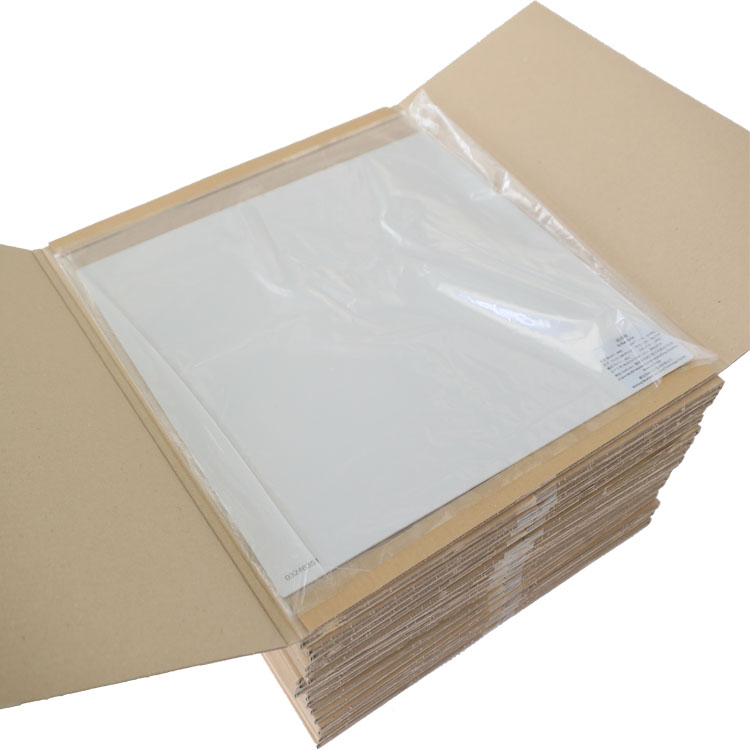
This custom X-ray anti-scatter grid is available with various grid ratios and grid densities. It blocks scattered radiation, improves radiographic contrast, and supports customized dimensions for different DR imaging systems.
Custom X-ray anti-scatter grids are essential accessories for radiographic imaging, designed to filter scattered X-rays and boost image contrast for clear diagnostic results. Unlike standard fixed-size grids, this series supports fully customized dimensions and technical parameters to match different flat panel detectors, film cassettes and mobile X-ray units.
The product provides multiple optional grid densities for selection. Available specifications include 40 lines per cm (103 lines per inch), 52 lines per cm (132 lines per inch), and 60 lines per cm (152 lines per inch). Higher grid density delivers finer filtering effect and reduces visible grid lines on the final radiograph, which is ideal for high-resolution imaging. Users can pick proper grid density according to their imaging application and detector resolution.
A wide range of grid ratios is available to meet different radiographic scenarios. Optional ratios cover 8:1, 10:1, 12:1 and 14:1. Low grid ratio like 8:1 works well for thin body parts and mobile radiography, featuring wider exposure latitude. Higher grid ratios such as 12:1 and 14:1 offer stronger suppression of scattered radiation, perfectly suited for thick anatomical regions where large amounts of scatter are generated.
Take the 9×11 inch (23×28 cm) model as an example; this size fits 8×10 inch photosensitive materials. The focal distance (F.D) can be selected from 0.8m to 2m, which brings great flexibility for fixed radiographic rooms and portable DR systems. The focusing distance must match the actual working distance between X-ray tube and grid, to avoid vignetting and signal loss on the image edge.
The core working principle relies on alternating lead strips and radiolucent interspaces. Primary X-rays travel along the direction of lead strip gaps and reach the detector. Disordered scattered photons hit the lead strips and get absorbed, removing the grey fog overlay on the radiograph. This greatly enhances the boundary definition between bone and soft tissue, helping radiologists identify subtle lesions.
One of the major advantages is customizability. Besides standard sizes, the factory can tailor the outer dimension of the X-ray grid to satisfy special equipment or cassette requirements. Whether for stationary radiography systems, portable X-ray machines or veterinary imaging devices, this custom anti-scatter grid can be configured with matched grid density, grid ratio and focal distance.
When choosing the grid, operators should balance grid ratio, focal distance and exposure parameters. Higher ratio grids absorb more primary X-rays, so mAs compensation is required during exposure. Selecting the correct focal distance and installing the grid with the right orientation are critical to prevent imaging defects. With flexible parameter selection and custom size service, this X-ray anti-scatter grid is a reliable choice to upgrade radiographic image quality for diverse imaging centers and equipment integrators.