

In routine clinical X-ray radiography, anti-scatter grids serve as irreplaceable auxiliary components for flat-panel DR systems and U-arm X-ray units. Without grids during most anatomical exposures, digital or film image definition drops drastically, which explains why fixed and mobile X-ray equipment is universally equipped with such grids.
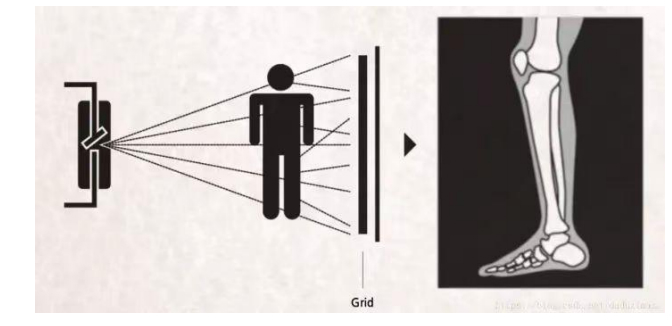
When X-rays penetrate human tissues, two types of radiation are produced. Primary rays travel vertically through the body toward detectors, capturing tissue density details for valid diagnostic images. Scattered radiation changes direction via refraction inside the human body; randomly scattered photons overlay imaging panels with foggy haze, lowering lesion contrast and hiding minor abnormalities to trigger missed diagnoses. The core mission of anti-scatter grids is blocking unwanted scattered radiation while permitting valid primary X-rays to pass through.
Structurally, anti-scatter grids are laminated with alternating lead strips and radiolucent filler materials arranged in parallel or focused layouts. Primary beams aligned with the X-ray tube’s central axis pass freely through gaps between lead strips, whereas deviated scattered rays get fully absorbed by dense lead to eliminate background fog at source. Focused grids dominate clinical applications with slanted lead strips pointing toward the tube focal spot, compatible with varying focal-film distances for mobile DR and fixed X-ray table systems.
Clinically, thick anatomical regions including chest, abdomen, pelvis and spine generate massive scattered radiation, making grids mandatory for usable diagnostic images. Though grids can be removed temporarily for thin extremities, premium high-precision radiography still adopts slim-type grids to optimize image quality.
Proper grid deployment cuts retake frequency, reduces patient radiation exposure and prolongs X-ray tube service life from maintenance perspective. Grid ratio and grid density act as core purchasing indicators; higher grid ratio delivers superior scattered ray suppression suitable for high-mA radiographic settings, widely recognized in medical equipment procurement and maintenance industries. Considering imaging performance, diagnostic accuracy and equipment protection, anti-scatter grids remain essential fittings for all standard X-ray examinations.
Post time: Jun-05-2026