

Medical imaging DR devices serve as core tools for clinical screening, disease diagnosis and injury assessment. Conventional fixed DR systems feature bulky structures and fixed‑position installation that rely on dedicated lead‑lined rooms. Patients have to visit specialized imaging departments for radiography. Such setup creates notable limitations for bed‑ridden patients, elderly individuals with limited mobility, emergency rescue and field screening scenarios.
Driven by lightweight, portable and intelligent upgrading of medical equipment, handheld DR, namely handheld digital radiography system, has emerged. It completely reshapes the operation mode of traditional imaging equipment by realizing “patient stays while device moves”. It fills imaging gaps in primary‑care institutions, emergency rescue, bedside diagnosis and field settings, evolving into an indispensable device for medical imaging.
What Is Handheld DR Unlock Lightweight Imaging Technology
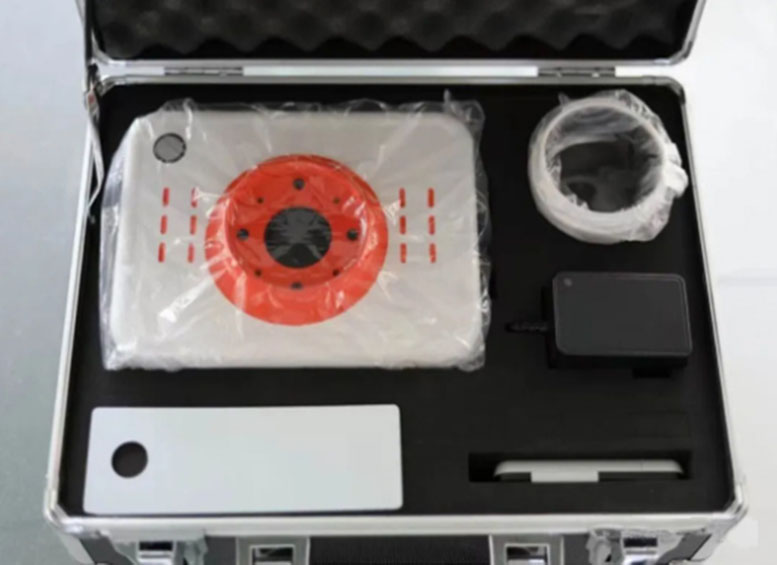
Handheld DR is an integrated portable imaging unit incorporated with mini high‑frequency high‑voltage generator, high‑precision X‑ray tube, intelligent control module and wireless imaging technology. It gets rid of drawbacks of bulky body, fixed machine room and complicated wiring belonging to traditional DR. Designed for maximum portability, the unit can be easily operated by single person and carried around. Dedicated lead‑shielded rooms are no longer required. Radiography and image acquisition can be implemented immediately after power‑on.
Different from trolley‑style conventional mobile DR, handheld DR boasts higher flexibility, compact storage and rapid deployment to fit constrained working environments. Equipped with intelligent radiation adjustment technology, it delivers high‑definition images while lowering radiation exposure far below industry safety thresholds. Safe examinations are available for seniors, children and sensitive populations, achieving triple advantages of portability, safety and diagnostic accuracy.
Four Core Advantages Redefine Mobile Imaging Diagnosis
Ultimate Portability for Full‑Scenario Adaptation
Featuring lightweight construction for single‑hand operation, the device can be transported to wards, ICUs, home‑care beds, township clinics and on‑site rescue locations. Free from fixed premises and complex installation, it supports instant deployment. It addresses long‑standing pain points that traditional DR cannot conduct on‑site or bedside examinations, bridging the last mile of medical imaging services.
Ultra‑low Radiation for Safe Diagnosis
Supported by intelligent micro‑dose exposure technology, radiation per scan is comparable to exposure received during short‑haul flights and well below national medical radiation safety standards. Built‑in radiation‑proof structures enable safe operation without dedicated lead chambers. It protects medical staff during long‑term operation and minimizes radiation risks for patients, especially vulnerable groups, enabling non‑invasive and secure screening.
Rapid Imaging Boosts Clinical Efficiency
Eliminating long waiting periods of legacy equipment, the high‑speed imaging module generates clear images within 12 seconds. Radiography, image formation and data transmission can be finished in one click. High‑resolution outputs clearly reveal pulmonary nodules, subtle fractures, bone lesions and thoracic abnormalities. Its imaging quality is comparable to large fixed DR units and meets clinical requirements for primary screening, precise diagnosis and post‑operative review.
Wireless Intelligence Streamlines Clinical Workflow
Wireless image transmission, automatic intelligent calibration and one‑click parameter adaptation simplify configuration. Even less‑experienced operators can handle it quickly. Acquired images can be uploaded to hospital PACS in real‑time for remote physician review, instant consultation and permanent file archiving. It optimizes clinical procedures, improves department productivity and adapts to modern smart healthcare systems.
Multi‑scenario Application Covering Comprehensive Medical Demands
Emergency & ICU: Critically ill patients cannot be relocated. Handheld DR performs radiography directly beside hospital beds and avoids risks caused by patient transfer. Top‑tier hospital ICUs adopt this portable unit to finish more than 50 bedside radiographies within one single day.
Orthopedics & Trauma Care: Fast imaging helps identify fractures and joint dislocations in urgent conditions. Rapid deployment supports on‑site examination during rescue missions. Intra‑operative real‑time imaging verifies implant installation and joint replacement outcomes.
Primary Healthcare & Community Services: Township clinics and remote medical facilities without large‑scale devices gain access to X‑ray examinations. Medical workers can bring the unit to homes of immobile elderly residents and complete scans beside beds during community public health campaigns.
Disaster Relief & Field Medicine: In harsh environments after earthquakes and floods, the compact battery‑powered unit supports fast establishment of temporary diagnostic stations. Researches prove portable DR delivers equivalent fracture diagnostic performance compared with trolley‑type mobile DR in field conditions.
Veterinary Medicine: Apart from human healthcare, handheld DR is widely deployed in veterinary practices. It generates precise imaging for pet bones, thoracic and abdominal cavities for surgical diagnosis, post‑surgical follow‑up and routine physical examinations, facilitating lightweight and accurate veterinary services.
New Industry Trend Portable Imaging Brings Human‑centered Healthcare
The old model where patients travel toward stationary medical equipment can no longer satisfy diversified, refined and human‑oriented medical requirements nowadays. The popularization of handheld DR represents not only technical iteration but also transformation of service patterns. With strengths of compact size, low‑dose radiation, fast output and broad compatibility, diagnostic imaging breaks constraints of location and space. Precise medical services extend beyond imaging departments toward bedside areas, grassroots communities and front‑line rescue sites. It enhances institutional efficiency and service capacity and delivers more convenient, secure and patient‑friendly care.
With continuous advancement of smart healthcare, handheld DR will empower emergency treatment, primary medical services, public health programs, convalescent care and veterinary sectors. It will become a vital component within medical imaging ecosystems and promote accessible resources and efficient clinical services.
Closing Remarks
Technology empowers medical services and meticulous details safeguard wellbeing. Compact handheld DR reflects technical progress as well as people‑oriented medical philosophy. Breaking limitations via portability and protecting health with accuracy, it makes every clinical treatment more efficient, safer and more considerate.
Post time: Aug-17-2026