

A director at a county hospital shared a frustrating experience with imported DR equipment fitted with amorphous selenium flat panel detectors. The imaging performance was outstanding, capable of revealing tiny fissures within bone trabeculae. However, the detector was extremely delicate. Within five years, four panels had to be replaced. Each replacement started at over 100,000 RMB, with premium models costing hundreds of thousands. Beyond the panel itself, on-site service from factory engineers came with separate pre-charged fees for travel, inspection and spare parts. Burdened by the soaring maintenance bills, the hospital eventually sold the imported unit and switched to domestic solutions. It is a thought-provoking reality. The high-end hardware purchased at a premium was abandoned simply because of prohibitive after-sales expenses.
The Value and Vulnerability of Flat Panel Detectors
Many practitioners outside the radiology department underestimate the complexity of DR systems, assuming X-ray imaging is a straightforward task. In fact, the flat panel detector, rather than the X-ray tube or mechanical stand, stands as the most valuable core component of a DR unit. It works much like the image sensor inside a digital camera. Once the sensor fails, the camera becomes unusable. The same rule applies to flat panel detectors. A faulty panel renders the entire DR system out of service. Unfortunately, this critical component is also the weakest link. It receives continuous X-ray exposure and operates in hospital environments with fluctuating temperature and humidity plus heavy foot traffic, which raises the risk of malfunctions. We have seen cases where a wireless imported panel slipped off a hospital bed. The repair quotation reached 40,000 US dollars merely from this single drop.
Hidden Risks in Detector Repair Markets
When a panel breaks down, repairs seem like the natural option, yet this sector carries plenty of hidden pitfalls. Imported detector models are locked with proprietary technology, meaning users can only seek official factory maintenance. Prices are non-negotiable, similar to branded smartphone repairs where an expensive screen replacement may cost as much as a budget new phone. Some facilities turn to third-party repair vendors to cut costs. Reports from medical institutions show that certain outsourced technicians fit second-hand components sourced from generic online marketplaces. The panel may function temporarily after repair, yet it fails again within months. Many technicians fall back on a simple fix: reboot the machine for mechanical jams and restart software for error alerts. Industry insiders follow an unwritten guideline: if repair costs reach 40% to 50% of a brand-new panel, replacement is the wiser choice. Repaired panels cannot guarantee stable service life. One fixed part may lead to failure elsewhere shortly afterward. Cumulative repair expenses often exceed the price of a brand-new detector.
Tough Challenges Faced by Grassroots Medical Facilities
Large tertiary hospitals have sufficient budgets to absorb expensive repairs, while grassroots medical providers operate under tight financial constraints. County hospitals and local clinics have limited annual maintenance budgets. A single panel failure costing over 100,000 RMB can consume most of a radiology department’s annual operational allowance. Equipment downtime brings further losses. Emergency scans, inpatient imaging services get suspended. Patients transfer to other facilities, causing revenue loss and harming the department’s reputation. It turns out the small savings made at the time of equipment purchase end up being multiplied in maintenance spending later.
Practical Guidance for Flat Panel Detector Selection
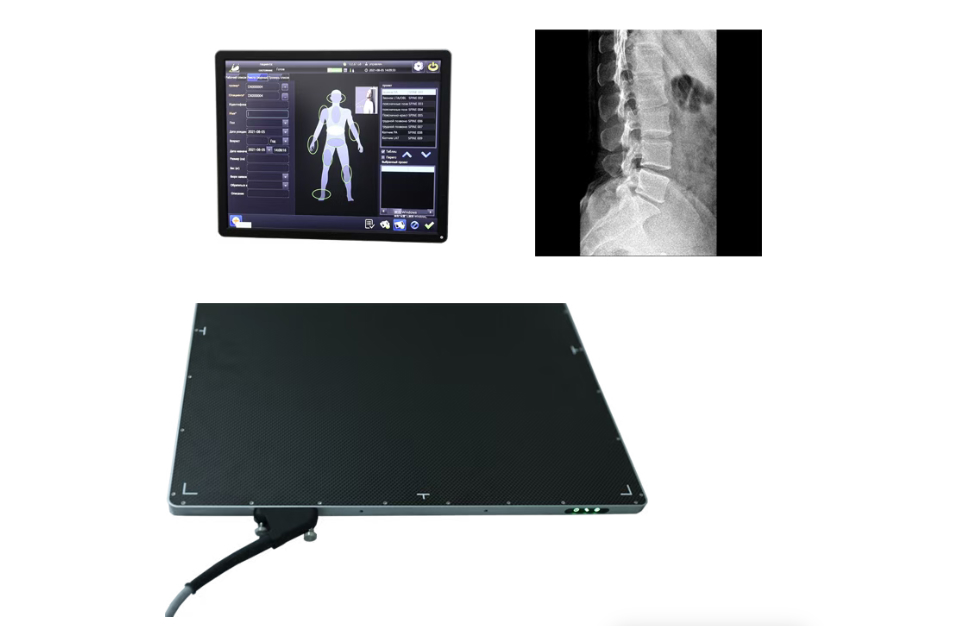
Making sensible choices during procurement helps medical facilities avoid most of these troubles. We are a direct manufacturer specializing in amorphous silicon flat panel detectors, supplying wired and wireless versions for grassroots hospitals, clinics and mobile DR systems. For most routine scanning tasks including chest, limb and orthopedic imaging in fixed radiography rooms, wired detectors deliver stable and reliable performance. They are free from common wireless drawbacks such as battery degradation and unstable Wi-Fi transmission. If the connecting cable wears out, replacement only costs a small amount, far more economical than high-cost panel repairs caused by accidental impact. In terms of imaging quality, key indicators including DQE and spatial resolution fully satisfy routine diagnostic requirements. Our lumbar spine images clearly display bone textures, vertebral edges and intervertebral spaces for clinical judgment. The supporting workstation software features an intuitive interface. Radiographers can master operation quickly without lengthy training. Most importantly, our pricing is highly competitive. Our detectors often cost less than half of comparable imported panels. As the original manufacturer, we provide fast local technical support with in-stock spare parts. Our engineering team responds promptly without long waiting periods for cross-regional stock transfer. If your facility is planning a DR upgrade, detector replacement or struggling with unaffordable maintenance for aging panels, feel free to contact us for further discussion.
Post time: Nov-03-2026