

Digital Radiography (DR) stands as one of the most fundamental and widely applied imaging modalities in clinical radiology. It is indispensable for routine chest X-rays in physical examinations as well as radiographic scans for suspected fractures. Among all DR systems available on the market, dual-column DR has emerged as the preferred solution for a growing number of medical institutions, thanks to its outstanding stability, flexible maneuverability and cost-effectiveness.
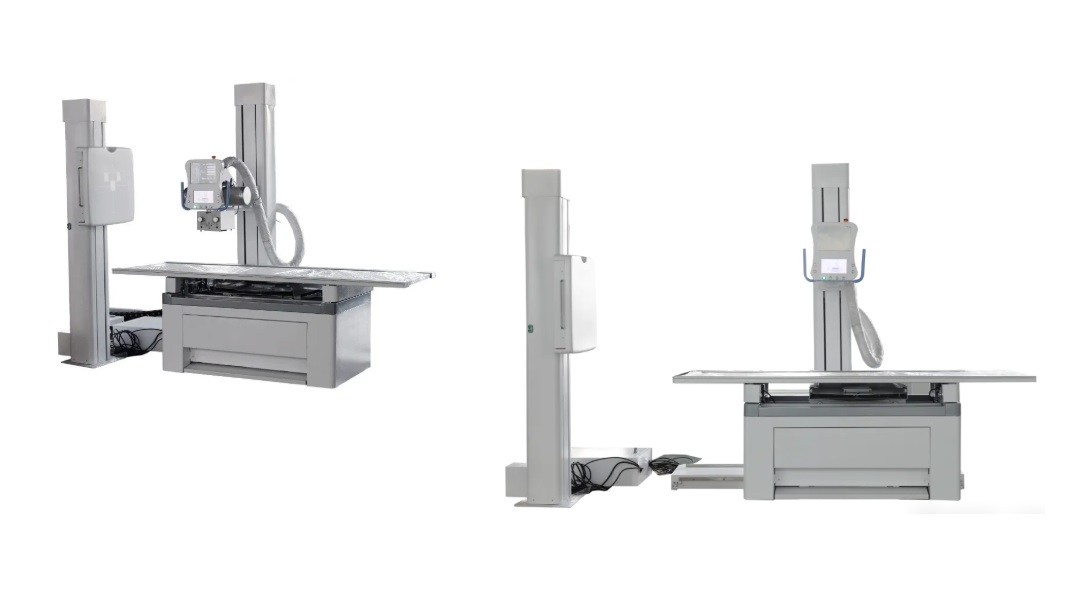
Simply put, a dual-column DR system is a digital X-ray imaging device supported by two separate vertical columns. One column holds the X-ray tube that emits X-ray beams, while the other mounts the digital detector that captures radiation signals and converts them into digital images. It may seem like the only difference is an extra column, yet this additional structural component delivers transformative performance improvements.
Conventional single-column DR equipment such as U-arm DR integrates the X-ray tube and detector onto a single cantilever arm. After long-term operation, uneven mechanical stress can cause minor structural deformation of the cantilever, compromising positioning accuracy. In contrast, dual-column DR distributes the full mechanical load across two separate ground anchor points, which drastically counteracts inertial vibration generated during rapid tube movement. This structural advantage effectively eliminates motion blur during prolonged exposure or special angled radiography—an essential feature for detecting tiny hairline fractures and subtle pulmonary nodules.
The two independent columns operate autonomously: the X-ray tube moves vertically along its dedicated rail, and the digital detector features its own independent lifting mechanism. For pediatric chest radiography, the detector can be lowered to a child-friendly height, with the X-ray tube simultaneously adjusted to the matching angle. This asymmetric synchronous positioning design cuts down communication barriers between staff and patients and greatly boosts exam throughput.
Built with a split modular layout, dual-column DR enables targeted maintenance and component replacement. Technicians can repair a faulty X-ray tube or calibrate a defective column separately, without the extensive disassembly required for all-in-one integrated DR units. The modular architecture minimizes downtime and slashes long-term operational costs over the equipment’s entire service life.
Dual-column DR is far more than a design with an extra vertical support. Its well-engineered mechanical load distribution, optimized spatial layout and separated functional modules deliver superior stability, enhanced operability and higher diagnostic image precision.
From the patient’s perspective, exams become more comfortable and time-efficient. For radiologists, sharper, clearer images provide solid evidence for accurate diagnoses. For hospital administrators, dual-column DR represents a sound capital investment that balances immediate clinical performance with sustainable long-term returns. Amid the full digital transformation of medical imaging, dual-column DR, the versatile all-rounder, has solidified its position as the cornerstone clinical imaging system for healthcare facilities worldwide.
Post time: Jun-30-2026