

Imaging diagnosis plays an irreplaceable role in the modern medical system. Conventional fixed DR systems, however, feature bulky structures and zero mobility. For critically ill patients, emergency trauma victims and residents in remote areas, taking an X-ray often requires risky and troublesome patient transportation. The emergence of portable Digital Radiography (DR) has completely reversed this predicament.
Portable DR, short for portable digital radiography system, refers to a maneuverable X-ray machine. Equipped with digital flat-panel detectors and high-performance X-ray generators, the equipment can be moved directly to patient bedsides or emergency scenes for radiographic examinations, earning it the nickname “radiology department on wheels”.
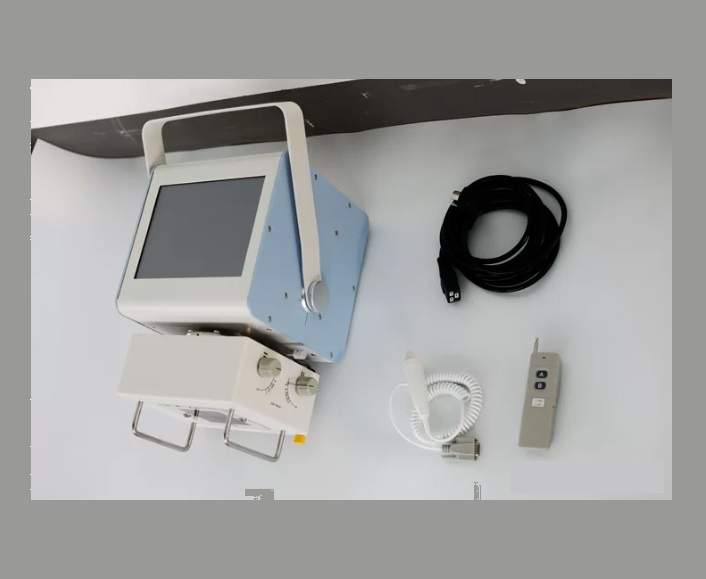
A complete portable DR system generally consists of a dedicated flat-panel detector, a portable X-ray unit (integrated with X-ray tube, high-voltage generator and built-in battery), and a mobile workstation. Certain portable DR models can be packed into dedicated transport cases with lightweight frames, enabling convenient storage in ordinary clinics.
Its working mechanism is straightforward. Under the control of an exposure controller, the X-ray tube inside the main unit emits X-rays. After penetrating the examined body part, X-ray signals are captured and processed by the flat-panel detector and converted into digital data. These data are wirelessly transmitted to the mobile workstation for real-time image rendering.
The core technology supporting this workflow is the digital flat-panel detector, which enables direct digital imaging. Unlike traditional film-based radiography, portable DR generates high-definition images on the screen within 3 seconds after exposure, allowing physicians to discuss diagnosis results with patients on the spot.
Boasting compact size and light weight, portable DR can be effortlessly wheeled or stored in transport cases. It can be deployed in ICUs, operating rooms, ambulances, earthquake disaster sites and remote medical outposts, fundamentally eliminating the difficulty of X-ray scanning for immobile critically ill patients.
Compared with large fixed DR equipment, portable DR features an intuitive operation interface and low environmental requirements for deployment. General practitioners at primary care facilities can master its operation after brief training, and routine maintenance is far less complicated.
Despite its miniaturized design, there is no compromise on image quality. Equipped with large-size seamless wireless flat-panel detectors (e.g., 17×17 inches), the system delivers sharp, delicate images with sufficient detail resolution to meet strict clinical diagnostic standards.
Driven by continuous technological innovations, portable DR is evolving toward lighter weight, higher intelligence and lower radiation dose. Its modular architecture supports AI function upgrades, laying a foundation for intelligent clinical decision-making. New technologies such as Dynamic Digital Radiography (DDR) are further expanding the application boundaries of mobile X-ray imaging.
It is predictable that portable DR will gain wider popularity in the future, becoming essential medical equipment for grassroots medical institutions, community health centers and even home-based medical services.
Beyond boosting the accessibility and efficiency of medical services, portable DR promotes balanced distribution of medical resources. High-quality radiology imaging services are no longer exclusive to radiology departments in large hospitals — they can be delivered directly to every patient in need.
Post time: Jun-29-2026