

Walk into any hospital radiology department, and you will notice X‑ray films requiring darkroom development have largely disappeared. Instead, physicians zoom, pan and examine high‑definition images directly on computer screens. At the heart of this digital revolution lies the flat panel detector (FPD).
It acts not only as the core component for modern medical imaging, but also serves as a powerful diagnostic tool for industrial non‑destructive testing and security screening. This article breaks down this groundbreaking technology in plain terms.
What Is a Flat Panel Detector
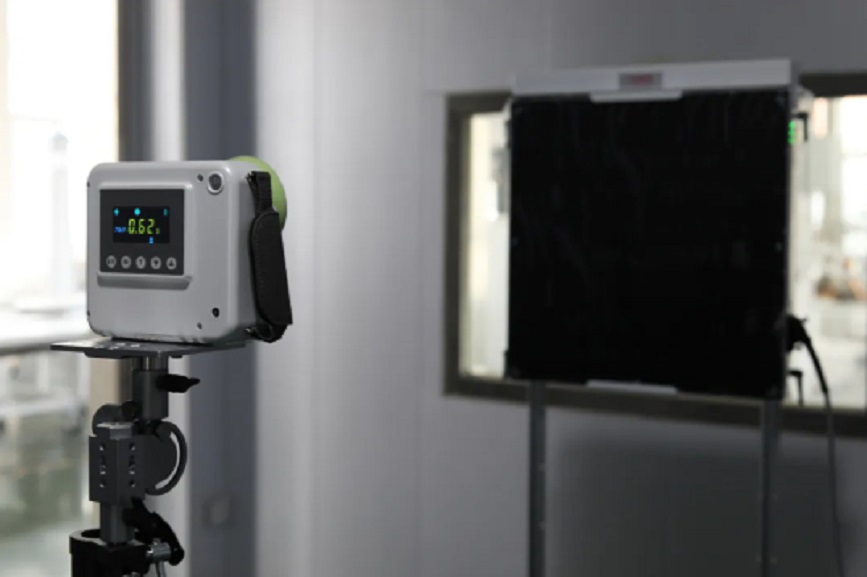
Simply put, a flat panel detector is a precision device that converts incoming X‑rays into digital image signals. Think of it as a super‑sophisticated digital camera specially built for X‑ray capture. Unlike ordinary cameras recording visible light, it captures X‑rays transmitted through human bodies or material objects and turns them into high‑resolution digital visuals.
Since the launch of the first commercial flat panel detector in 1995, its advantages including fast imaging speed, reduced radiation dosage and superior image quality have enabled it to replace traditional film‑screen systems. It has become the cornerstone technology behind digital radiography (DR).
Working Principles Two Main Technical Architectures
How does a flat panel detector turn X‑ray radiation into viewable pictures? Two mainstream conversion approaches dominate today’s market.
Indirect Conversion represented by amorphous silicon This is the most widely adopted solution globally. Step one: X‑rays hit the scintillator layer, usually cesium iodide or gadolinium oxysulfide, where X‑ray photons get transformed into visible light. Step two: The generated visible light is absorbed by underlying amorphous silicon photodiode arrays and converted into electrical signals. Analog‑to‑digital modules then produce final digital images.
Direct Conversion represented by amorphous selenium This approach removes intermediate light conversion steps. X‑ray photons strike the amorphous selenium semiconductor layer and generate electron‑hole pairs. Driven by an applied electric field, these electric charges are collected and read out via thin‑film transistor (TFT) arrays.
Technology Selection Reference
Amorphous‑selenium detectors deliver outstanding spatial resolution and sharper visuals without light scattering interference. They fit perfectly for detail‑demanding examinations such as mammography and bone joint radiography.
Amorphous‑silicon detectors feature broad dynamic range, strong environmental adaptability and relatively lower costs. They remain the mainstream choice for chest radiography, abdominal scans and general orthopedic examinations.
Core Advantages of Flat Panel Detectors
Millisecond‑level imaging: Clear images are generated seconds after exposure. It cuts waiting time for patients and offers critical support for emergency trauma care.
Reduced radiation exposure: High detective quantum efficiency (DQE) allows sharp image outputs at lower X‑ray dosage levels and lowers radiation risks. For pediatric bone‑age assessment, radiation dose can drop as low as 0.01 mGy.
Intelligent post‑processing: Digital images support flexible adjustments of window width and window level, magnification and measurement functions. Combined with AI‑assisted diagnosis, subtle lesions can be easily identified.
Wireless mobility: Wireless flat panel detectors free operators from cable restraints. They can be deployed in ICUs, operating rooms and even ambulances.
Wide Application Scenarios Beyond Healthcare
Flat panel detectors have stepped outside hospital premises and been adopted across multiple industries.
Medical Fields
‑ Chest screening: Detect tiny pulmonary nodules and pneumonia lesions. ‑ Orthopedic radiography: Enable seamless full‑spine and full‑lower‑limb image stitching for precise measurement. ‑ Emergency trauma management: Dynamic DR tracks fracture reduction procedures and generates fluoroscopic video sequences. ‑ Mammography screening: High‑precision dedicated detectors support early‑stage breast cancer identification.
Industrial Non‑Destructive Testing
Within manufacturing workflows, flat panel detectors function as strict quality controllers. ‑ Aerospace industry: Detect internal cracks on aero‑engine blades and composite components. ‑ Automotive manufacturing: Inspect casting defects and internal faults inside battery assemblies. ‑ Electronics production: Locate micro soldering flaws on circuit boards. ‑ Pressure vessels and pipelines: Perform routine safety inspection for gas pipelines to eliminate hidden hazards. State‑of‑the‑art industrial detectors achieve resolution down to 0.05 mm, finer than human hair.
Closing Thoughts
From bulky analog films to slim digital panels, from blurry exposures to crisp digital visuals, flat panel detectors have reshaped our way of observation over two decades. They support accurate clinical diagnosis, improve product safety standards and enhance security checks for public transportation.
This seemingly sophisticated technology quietly safeguards public health and operational safety every single day.
Post time: Aug-18-2026