

Portable veterinary X-ray equipment has become essential imaging gear for pet clinics and research institutions, meeting the flexible on‑site radiography demands for small and medium animals. Unlike large fixed radiography devices, this compact high-frequency X-ray unit breaks the limitation of fixed examination rooms, bringing reliable radiographic diagnosis to diverse working sites.
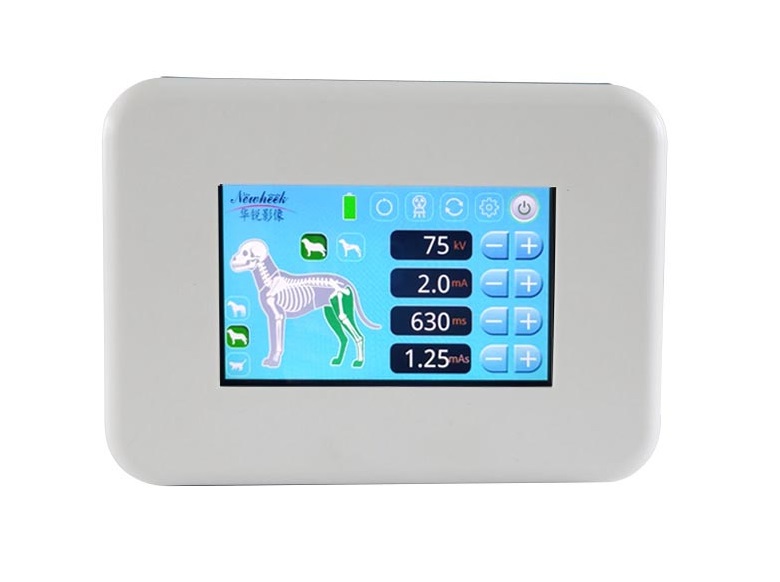
The core of this veterinary X-ray machine adopts high-frequency inverter technology. Compared with low-frequency traditional X-ray generators, high-frequency conversion can deliver much more stable high-voltage output. Tube voltage and tube current are controlled with high precision. Stable power supply reduces the fluctuation of X-ray photon energy, minimizing image noise and ensuring consistent, clear radiographic results. This stable output is critical for identifying subtle fractures and soft tissue lesions in animal bodies.
This unit supports multiple exposure control options, including remote control and hand switch. The dual-control design greatly improves operation safety and convenience for technicians. Operators can stay away from the radiation source during exposure, effectively lowering radiation exposure risk. The hand switch follows standard medical safety design, which is widely adopted in animal radiography practice.
Boasting simple structure, small footprint and light weight, this veterinary X-ray machine is easy to carry and transport. It can be deployed in different locations without relying on dedicated radiography rooms. For mobile house-call pet services, field research and teaching scenarios, its mobility brings great convenience. It can work together with DR flat panel detectors to build a complete digital DR radiography system. Once paired with the flat panel detector, captured images can be viewed instantly, shortening waiting time for diagnosis.
It is widely applied for physical examination and diagnosis of small and medium animals. Apart from daily diagnosis inside pet hospital clinics, it also fits scientific research and teaching tasks in medical research institutes and medical schools. For veterinary teaching, the compact machine helps students learn radiographic operation and image interpretation. For research teams, it provides repeatable and stable imaging data for animal studies.
Many veterinary practitioners used to face troubles when choosing X-ray devices. Large stationary X-ray machines are costly and cannot be moved, while some portable units suffer unstable voltage and poor image consistency. This high-frequency portable X-ray unit balances portability and imaging performance. With accurate tube parameter control, flexible exposure triggering and DR compatibility, it satisfies both routine clinical diagnosis and academic research needs. When configured with proper accessories such as X-ray hand switch and flat panel detector, it becomes a full mobile digital imaging workstation for veterinary practices.
Post time: Sep-16-2026