

Veterinary radiography has long faced tough constraints. Large fixed X-ray machines are heavy, immovable and require dedicated shielded rooms. For animal clinics, mobile veterinary services and farm practices, transporting patients to the imaging room creates stress and risk for pets and large animals alike. The portable handheld X-ray device changes this situation, bringing diagnostic imaging directly to horses, dogs, cats and other companion animals wherever they are.
How Handheld Veterinary X-Ray Works
At its core, the handheld X-ray unit follows the fundamental principle of X-ray generation. When high voltage is applied across the X-ray tube, electrons accelerate rapidly and collide with the tungsten target inside the tube. The collision releases X-ray photons. These photons penetrate animal tissues. Denser structures such as bones absorb more rays, while soft tissues let more radiation pass through. The flat detector captures the residual rays and converts signals into a digital radiographic image.
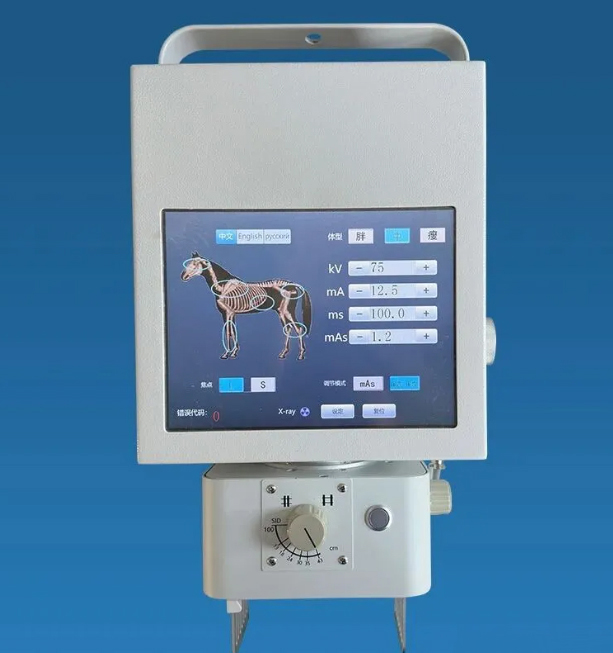
Unlike stationary X-ray equipment for hospitals, handheld veterinary X-ray systems integrate a miniaturized high-frequency generator, compact X-ray tube, control panel and rechargeable battery pack into one portable housing. The high-frequency generator is a key upgrade. It delivers stable high voltage with less ripple, which reduces image noise and cuts unnecessary radiation compared with old low-frequency generators.
Operators trigger exposure via a wired hand switch. After exposure, the detector sends images wirelessly to a tablet or laptop within seconds. There is no film processing. Images can be zoomed, adjusted and saved immediately.
One critical industry point: even though it is compact, handheld X-ray still produces ionizing radiation. Operators must wear lead protective gear and use collimators to narrow the X-ray beam. The collimator limits the radiation field to only the target body part. This protects both animals and staff from unnecessary scattered radiation, which is essential for daily field work.
Key Benefits for Equine and Companion Animal Imaging
True portability for hard-to-move patients
The biggest advantage lies in mobility. This handheld unit weighs only a fraction of fixed X-ray systems. It can be carried by one technician to barns, stables, farm fields, home visits or emergency sites.
For horses especially, moving an injured equine to a clinic is extremely difficult. Fractures, hoof injuries and joint damage can worsen during transport. With handheld X-ray, vets take radiographs right inside the stable stall. For companion animals such as large dogs, cats or exotic pets that become highly anxious during clinic visits, on-site imaging reduces stress and avoids injuries caused by struggling and restraint.
Simple operation and fast workflow
The device has a user-friendly interface with pre-set exposure parameters for different species and body parts. Practitioners can quickly select presets for equine hoof, canine limb or feline thorax. New operators can learn basic operation in a short time.
Built-in rechargeable battery removes reliance on mains power. In remote areas with no power outlets, the unit can keep working for dozens of exposures on a single charge. After shooting, digital images transmit instantly. No waiting time for film development. This greatly speeds up diagnosis during emergency cases.
Reliable image quality for clinical judgement
Many buyers mistakenly assume compact handheld machines sacrifice clarity. Modern veterinary handheld X-ray units paired with digital flat detectors produce sharp radiographs. Fine bone lines, joint spaces, subtle fractures and soft tissue swelling can all be visualized clearly. The images meet diagnostic standards for orthopedic checks, pre-surgical evaluation and follow-up examinations.
It is worth noting that the image result also depends on proper collimation, correct exposure settings and stable positioning. Good technique remains necessary even with advanced hardware.
Lower setup cost and flexible investment
Fixed X-ray rooms require construction, radiation shielding and dedicated space, which brings high upfront costs. Handheld X-ray removes most of those civil construction expenses. It is a practical choice for newly opened vet clinics, mobile vet businesses and equine hospitals wanting to expand imaging services without large renovation work.
Main Application Scenarios
Equine veterinary service Used for hoof radiography, fetlock, cannon bone, knee and shoulder imaging. It helps vets diagnose laminitis, bone chips, stress fractures and joint injuries right in stables, widely adopted by equine hospitals and travelling horse veterinarians.
Small companion animal clinics Ideal for dogs and cats. Common uses include limb fracture screening, chest radiographs, abdominal imaging and post-operation follow-up. It works well for patients that cannot be safely carried to stationary imaging rooms.
Mobile vet outreach and emergency response Perfect for field emergency calls, animal rescue missions and farm visits. The lightweight design fits into a vehicle, enabling vets to respond quickly to sudden injuries at farms or remote locations.
On-site farm and shelter health screening Animal shelters and breeding farms can perform regular health checks on-site. Batch screening helps identify hidden bone issues before they become severe.
Closing Thoughts
Portable handheld X-ray devices fill an important gap in veterinary diagnostic imaging. Miniaturized high-frequency tube technology makes mobile radiography practical for both horses and companion animals. It eliminates the trouble of transporting large or stressed animals, accelerates diagnosis and brings reliable digital images to the field.
It will keep evolving toward lighter weight, smarter parameter recommendation and lower radiation leakage. For equine practitioners, mobile vet service providers and small animal clinics, handheld X-ray is a valuable tool to expand service capability and improve animal care quality..
Post time: Sep-22-2026