

Mention X‑ray examinations, and most people’s default understanding is: register for a consultation, wait in line, head to the fixed radiology department in a hospital, and wait for images to be generated. However, in emergency resuscitation, ICU monitoring, grassroots field medical screenings, home‑based elderly care ward rounds, outdoor emergency rescue and other scenarios, asking patients to travel to equipment often becomes a major obstacle. Bedridden critically‑ill patients cannot be transported, elderly residents in remote villages face travel barriers, and on‑site emergency missions lack imaging support. The limitations of traditional fixed DR systems place many basic radiographic examinations in a difficult position.
The advent of portable DR (portable direct digital radiography system) completely reverses this situation, bringing a full‑set professional radiology service right beside patients. This article elaborates on why this “mobile imaging powerhouse” in the medical industry has become a standard tool for grassroots medical care, emergency treatment and public health screenings.
What Exactly Is Portable DR: A Carry‑along Professional Radiology Center
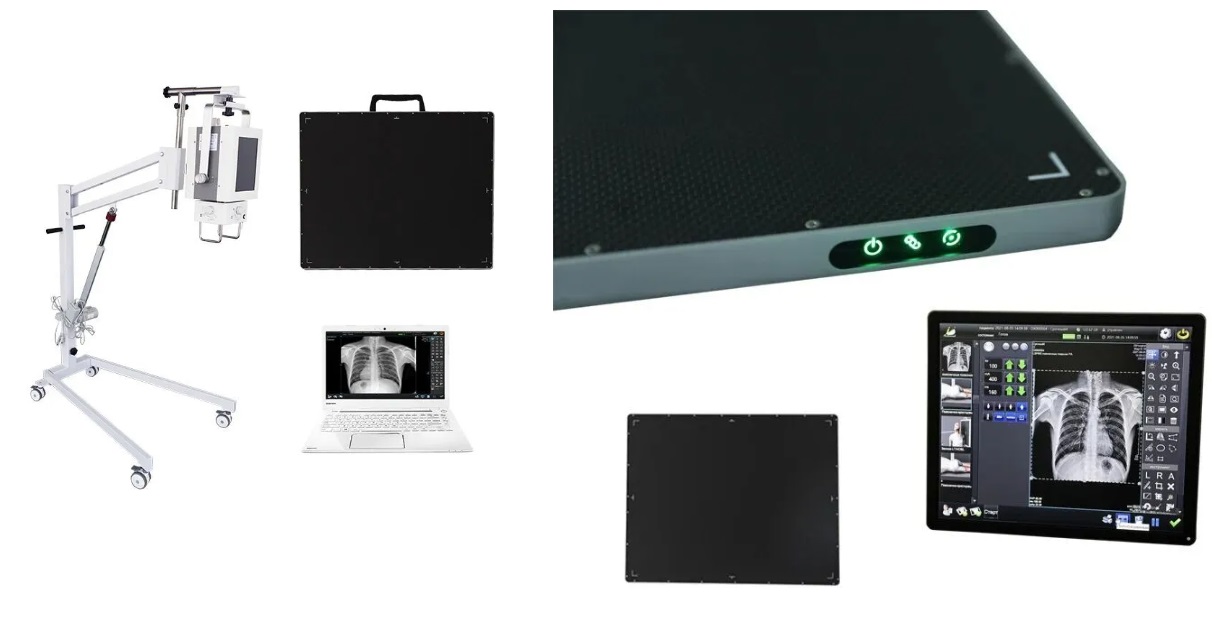
Simply put, portable DR is a lightweight, movable digital X‑ray imaging unit that requires no dedicated radiology room. It is a portable upgraded alternative to large‑scale conventional DR equipment. Traditional hospital DR devices are bulky and permanently installed, so patients must visit the radiology department for scans.
Portable DR overturns this workflow. It abandons heavy fixed gantry frameworks and adopts foldable racks and integrated storage design. Compact and easy to carry, the whole unit can be operated by one person and stored inside vehicle trunks for transportation. Its core advantage can be summed up in one sentence: the machine moves instead of the patient. No dedicated room or fixed site is required. Supported by a large‑capacity built‑in lithium battery, it can be quickly assembled for immediate X‑ray shooting upon unpacking, delivering high‑definition radiographic results anytime and anywhere. It functions as a miniature mobile radiology department deployable for on‑site missions.
Four Core Advantages Enabling New Medical Examination Scenarios
Supreme Portability for Multi‑scene Transportation
Different from cumbersome traditional equipment, new‑generation portable DR features streamlined structure and reduced weight. It eliminates labor‑intensive multi‑person handling. It adapts well to intra‑hospital ward transfers, community building access, rural outreach programs, outdoor emergencies and on‑site medical check‑ups. Even female medical staff can independently finish transporting, assembling and operating the device without extra manpower support.
Bedside Radiography Safeguards Critically‑ill Patients
For ICU admissions, emergency cases, post‑surgery bedridden individuals and fracture‑paralyzed patients, transferring them for radiography carries substantial risks. It may trigger unstable vital signs, dislodged infusion tubes and secondary wound injuries. Portable DR can perform X‑ray scans directly beside hospital beds without moving patients. Non‑invasive and efficient, it provides vital imaging references for critical‑illness diagnosis, condition monitoring and post‑operative evaluation, greatly lowering clinical treatment risks.
High‑definition Imaging Matching Large Fixed Equipment
Many hold the misconception that portability means compromised performance. In fact, high‑quality portable DR adopts advanced digital imaging technology and automatic tube calibration systems. Its image clarity and resolution are fully comparable with large fixed hospital DR units. It accurately captures pulmonary nodules, inflammatory lesions, bone fractures and subtle abnormalities, fully meeting professional standards for clinical diagnosis, disease screening and medical record archiving without sacrificing diagnostic accuracy.
Low‑radiation Safety for Diverse Population Screening
Radiation safety is a major public concern. Qualified portable DR applies low‑dose exposure technology complying with international safety standards. Radiation output per exposure is minimal, lower than general background environmental radiation and flight‑related radiation. It is safe and well‑tolerated by seniors, children and sensitive groups.
Beyond Rural Screenings: Wide‑ranging Applicable Scenarios
Portable DR is far more than a rural‑only screening tool. It serves diverse medical sectors:
- Grassroots public health services: Complete physical examinations for elderly and chronic‑disease patients in villages, removing barriers to healthcare in remote regions.
- In‑hospital clinical practice: Bedside X‑ray imaging within ICU, wards and emergency departments, accelerating diagnosis and shortening patient waiting time.
- Emergency rescue support: Pre‑hospital first aid, disaster relief, outdoor free clinics and sports event medical backup. Reliable imaging data can be rapidly obtained without site constraints to guide on‑site treatment.
- Special‑population screening: On‑site examinations for nursing home residents, rehabilitation center patients and home‑bound bedridden people to avoid exhausting trips to hospitals.
- Medical institution empowerment: Township hospitals and private clinics can launch professional radiographic services without costly room renovation, improving local medical capacity rapidly.
Debunking Common Misconceptions about Portable DR
Myth 1: Portable DR generates heavy radiation and is unsafe Truth: Valid medical‑grade portable DR uses low‑dose imaging technology with well‑controlled minimal radiation. It complies with global medical safety standards and is reliable for routine clinical and screening usage.
Myth 2: Portable devices produce blurry and inaccurate images Truth: Modern digital portable DR delivers sharp precise images capable of detecting subtle lesions. Its diagnostic standards align with large hospital‑fixed equipment and satisfy clinical diagnosis and health screening requirements.
Myth 3: It only takes chest X‑rays with limited functions Truth: It supports chest radiography, limb bone scans and torso imaging. It covers physical screening, orthopedic assessment, pulmonary disease evaluation and trauma diagnosis with strong practical value.
Closing Thoughts
Medical progress lies not only in technical upgrades but also in human‑oriented service optimization. Shifting from “patients traveling toward equipment” to “equipment traveling toward patients”, compact yet professional portable DR fills gaps left by fixed imaging systems. It extends high‑quality radiographic services outside hospital walls into grassroots communities.
More than an efficiency‑boosting clinical tool, it helps bridge gaps in healthcare access and protects public wellness. Powered by portability, it builds solid medical safeguards and delivers precise imaging services for every community.
Post time: Aug-26-2026