

Introduction
When talking about X-ray examinations, most people picture a standard radiology suite shielded by thick lead-lined doors. Patients stand before rigid detectors and adjust their postures as instructed by radiographers. However, this standard workflow becomes nearly impossible for critically ill ICU patients, elderly residents living in remote mountainous areas, and trauma casualties at disaster sites.
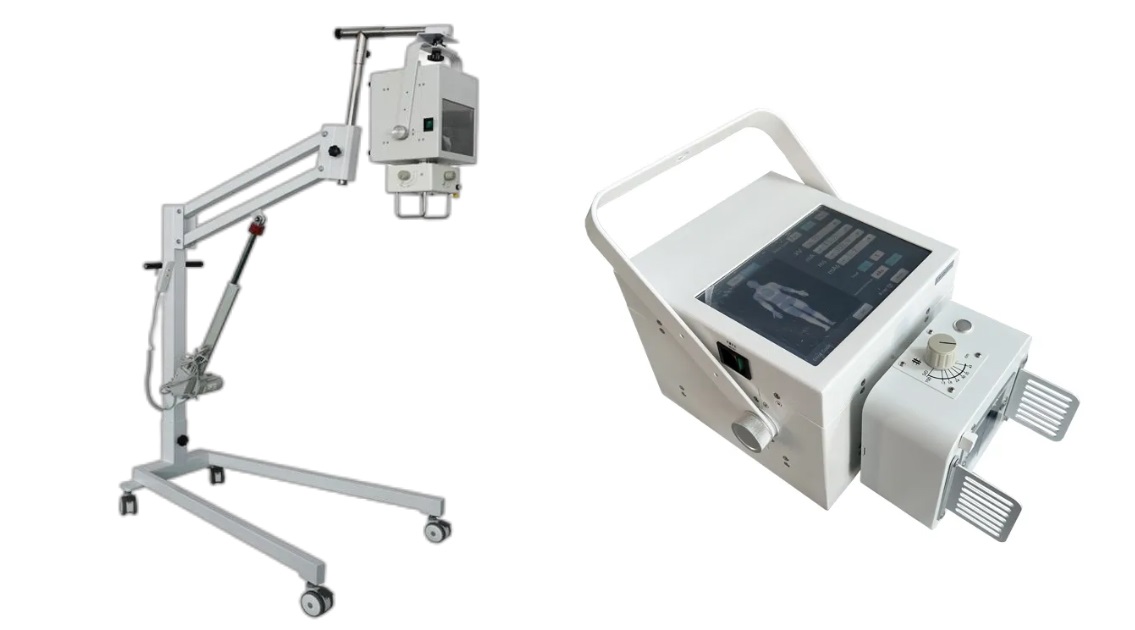
Portable Digital Radiography (Portable DR) has completely rewritten this conventional model. Lightweight, mobile and capable of instant imaging, it compresses bulky hundreds-of-kilogram fixed radiology equipment into a compact carry case or lightweight trolley. This transformation is far more than a mere reduction in equipment size—it marks a fundamental shift in the delivery of radiological care: instead of patients traveling to imaging equipment, equipment travels to patients.
What Exactly Is Portable DR
Simply put, portable DR is a fully mobile X-ray imaging system. Though far more compact and lightweight than traditional fixed DR machines, it delivers identical powerful diagnostic imaging performance.
Its working principle relies on X-ray attenuation across human tissues. X-rays penetrate the body and get absorbed at varying rates by tissues of different densities. Digital flat-panel detectors convert residual X-ray signals into digital data, generating crisp, detailed visual images of internal anatomical structures on connected computers.
Unlike outdated film-based radiography, the fully digital workflow eliminates tedious chemical developing procedures. Captured scans can be instantly previewed, securely stored, wirelessly transmitted and digitally optimized for clinical diagnosis.
Where Patient Care Is Needed There Stands A Mobile Radiology Suite
Emergency Departments and ICUs Minimizing Patient Movement Equals Superior Clinical Outcomes
For patients with multiple traumas, shock or spinal injuries, every transfer carries a high risk of worsening their conditions. Portable DR can be wheeled directly to bedside to complete chest and extremity radiography, enabling clinicians to rapidly identify pneumothorax, bone fractures and pulmonary infections. It also supports immediate imaging after endotracheal intubation to verify catheter placement and guarantee safe treatment.
As industry experts put it: for critically ill patients, this mobility is not just a convenience—it is a life-saving technology.
Primary Healthcare and Public Health Screenings Delivering Premium Imaging Resources to Underserved Communities
Many national healthcare systems include chest DR scans in routine public health examinations for seniors aged 65 and above, which has driven surging demand for imaging services at grassroots medical facilities. Portable DR features a moderate footprint and affordable total cost of ownership, and requires no dedicated shielded radiology room, making it perfectly suited for space-limited township health centers and community clinics.
Mounted on mobile medical vehicles, it can travel to villages to complete over 200 chest screenings per day. Medical teams can bring scanning services straight to village squares, allowing elderly residents in their 70s to receive professional X-ray checks without long-distance trips to county hospitals.
Emergency Rescue and Field Military Medical Imaging Scout for Golden Treatment Windows
Fixed radiology equipment cannot be deployed in earthquake, flood and other disaster-stricken zones. Portable DR can be transported to temporary field medical stations immediately alongside rescue teams, enabling rapid screening of fractures and internal organ injuries to guide patient triage and emergency treatment.
Certain models support solar power supply and come with matching mobile lead screens to protect operators from radiation exposure. Clinical research confirms there is no statistically significant difference in diagnostic accuracy between portable DR and large fixed mobile DR units for fracture identification, delivering reliable imaging results for on-site trauma assessment.
Challenges and Future Outlook Clear Direction Despite Ongoing Barriers
Large-scale popularization of portable DR still faces multiple hurdles. Core components including flat-panel detectors, high-voltage generators and X-ray tubes remain partially reliant on overseas imports. Low-end entry-level devices often suffer from blurry imaging and slow output speeds, while inconsistent cross-industry technical standards lead to uneven product quality across manufacturers.
Nevertheless, the industry’s development trajectory is unambiguous: lighter hardware, faster imaging and integrated intelligent diagnostics. The overall weight of complete systems is evolving from over 20 kilograms down to single-digit kilograms, while imaging latency is advancing from seconds to milliseconds. AI-assisted diagnostic algorithms are transitioning from an optional add-on to a standard built-in feature.
Emerging dynamic portable DR technology combines static snapshot radiography with real-time fluoroscopy, upgrading bedside imaging capabilities from basic anatomical recording to functional real-time observation. Combined with 5G high-speed data transmission and remote expert consultation systems, portable DR is evolving from an isolated scanning device into a seamless imaging bridge linking grassroots clinics and top-tier tertiary hospitals.
Closing Remarks
The core value of portable DR extends far beyond its compact size and easy mobility. It spares 80-year-old rural seniors from bumpy multi-hour journeys to county hospitals just for a chest X-ray. It eliminates life-threatening transfers for critically ill ICU patients who need urgent radiological assessment. It delivers precise diagnostic imaging to disaster victims within the critical golden rescue window.
Post time: Jul-15-2026