

Traditionally X ray examinations must be carried out inside dedicated radiology departments, which requires transporting and repositioning patients. For critically ill patients, every transfer brings potential risks. Today, portable Digital Radiography (DR) systems are reshaping this scenario. These devices bring X ray examinations out of stationary radiology rooms and directly to patients, earning them the reputation of “radiology departments on wheels”. This article delivers a comprehensive overview of this transformative innovation reshaping the landscape of medical imaging.
1. What Is Perambulatory DR
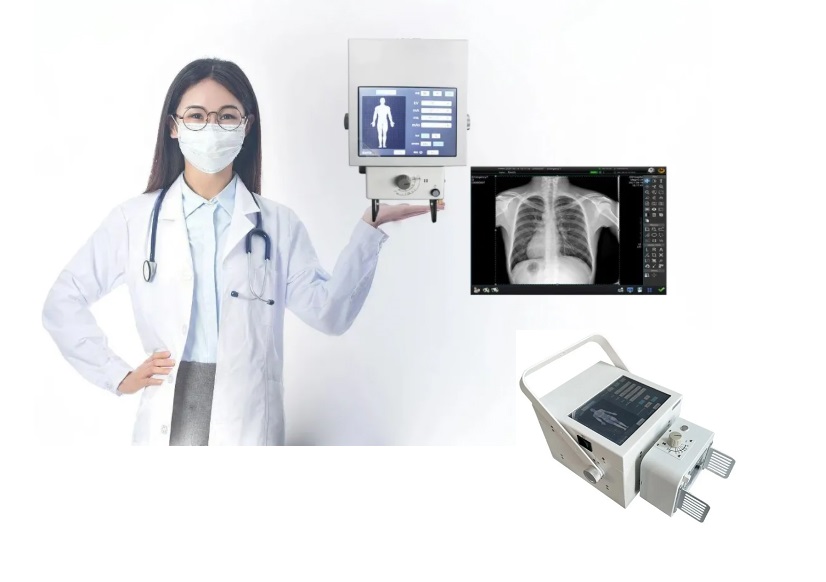
Portable Digital Radiography (Perambulatory DR) refers to a mobile digital radiography system. It is a flexible transportable X ray unit integrating a high-frequency X ray generator and digital flat panel detector, enabling radiographic imaging directly at patients’ bedside.
A standard portable DR mainly consists of three core modules:
- High-frequency X-ray Generator: Adopting high-frequency inverter technology, it features compact size and high efficiency to deliver stable X-ray output.
- Digital Flat Panel Detector (FPD): Converts X-rays penetrating human bodies directly into digital signals.
- Image Processing System: Generates DR images in real time and supports image processing, storage and network transmission.
2. Core Application Scenarios of Portable DR
Bedside Examinations Inside Hospitals
This is the most mature application of portable DR. In ICUs, emergency departments and operating rooms, critically ill patients cannot be easily moved. Portable DR units can be deployed beside patient beds to complete radiography of the head, chest, abdomen, limbs and other body parts. Research proves that bedside radiography with portable DR delivers remarkable advantages in convenience and efficiency compared with conventional solutions.
Emergency Treatment and Intensive Care
For patients with multiple trauma, respiratory failure and other critical conditions, portable DR supports rapid bedside diagnosis of fractures, pneumothorax, pulmonary infection and other acute illnesses. Patient transportation is avoided, eliminating risks such as displaced endotracheal intubation and interference from supporting medical equipment.
Primary Healthcare and Public Health
Portable DR serves as a practical solution to the shortage of imaging equipment in grassroots medical institutions. Township health centers and community clinics can deploy the device for routine radiography and chronic disease screening. Under the mobile physical examination model with vehicle-mounted DR, medical teams can carry the equipment to rural areas and provide home-based health screening for the elderly with limited mobility.
Emergency Rescue and Field Military Medicine
During natural disasters such as earthquakes and floods, portable DR can be rapidly deployed in areas with power outages or damaged infrastructure. Field medical teams rely on this equipment to quickly diagnose fractures, thoracic and abdominal combat injuries. Its outstanding mobility and environmental adaptability meet the requirements of rapid deployment and withdrawal for medical support missions.
3. Market Outlook: A Fast-Growing Blue Ocean
Portable DR has become a high-growth product within the medical imaging equipment sector.
- Domestic Market: The market scale of portable DR in China exceeded 3.2 billion RMB in 2025 with an annual growth rate above 18%. In Q1 2025, a total of 904 DR devices including stationary DR, mobile DR and portable DR were purchased nationwide, with a total contract value of approximately 1.05 billion RMB.
- Global Market: The global mobile DR equipment market size is estimated to reach USD 10.779 billion in 2025 and is projected to hit USD 19.704 billion by 2032. The handheld DR market is expected to grow from roughly USD 62.5 million in 2025 to USD 181 million by 2032.
Domestic manufacturers have achieved impressive progress. Chinese brands secured 11 positions in the Top 15 DR equipment sales ranking in Q1 2025.
4. Lighter Technology Breaks Boundaries of Medical Services Precise Imaging Safeguards Public Health
Portable DR is far more than mobile imaging hardware. It acts as core equipment for upgrading primary medical services, expanding public health resources and supporting emergency medical response. It removes the restriction of fixed examination rooms for high-quality diagnostic imaging, extending professional medical services beyond hospitals to grassroots communities and emergency sites. It makes every radiographic examination efficient, precise and accessible to all patients.
5. Future Development Trends
Technological iteration of portable DR continues to accelerate:
- Intelligence: AI-assisted diagnosis is gradually integrated, enabling automatic exposure adjustment, intelligent image optimization and automatic lesion identification.
- Lightweight: Ultra-thin anti-scatter grids and carbon fiber materials are widely adopted to further reduce equipment weight.
- Remote Connectivity: Integration of 5G and edge computing allows real-time transmission of imaging data and remote expert consultation.
- Superior Imaging Performance: Low-noise CMOS detectors and photon counting technologies are applied to deliver image quality comparable to fixed radiography systems.
Conclusion
Portable DR breaks geographical limitations of medical imaging, shifting examinations from fixed radiology suites to patient bedsides, from top-tier urban hospitals to remote villages. It represents not merely technological innovation, but also a key driver of inclusive healthcare. With continuous technical upgrades and cost optimization, portable DR will be applied across more scenarios, bringing premium medical imaging services to populations in need worldwide..
Post time: Jul-27-2026