

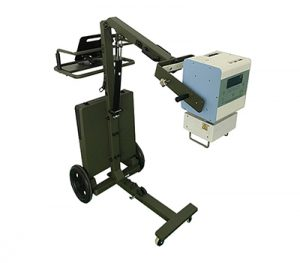
Small mobile X-ray stands are essential auxiliary equipment for modern medical radiographic imaging systems, widely matched with portable X-ray machines, DR flat-panel detectors, and CR IP boards. Different from fixed wall-mounted and vertical X-ray racks, this lightweight and flexible mobile bracket breaks the limitations of traditional fixed imaging spaces. It features flexible displacement, adjustable height, and strong compatibility, supporting on-site radiographic examinations in multiple scenarios, and has become a core practical device for grassroots medical institutions, emergency rescue, and mobile physical diagnosis.
The working principle of the small mobile X-ray stand is based on standardized X-ray imaging logic and ergonomic structural design. During radiographic examination, the X-ray tube emits stable ray beams that penetrate human tissues. Tissues of different densities produce varying attenuation effects on X-rays, forming distinct grayscale imaging signals on the rear detector. The mobile stand acts as a precise positioning carrier, fixing the detector and film cassette stably to avoid offset or shaking during exposure. Its adjustable lifting structure accurately controls the source-to-image distance (SID) and imaging height, ensuring consistent imaging parameters, effectively improving radiographic clarity, and eliminating blurred images or invalid films caused by manual positioning deviation.
Structural rationality lays the foundation for its multi-functional application. The small mobile X-ray stand adopts a lightweight integrated frame and universal wheel design with foot brake locking function, enabling free movement in narrow spaces such as ward aisles, emergency rooms, and ambulance carriages. The flexible lifting and positioning structure adapts to imaging requirements of multiple human parts, including the head, chest, abdomen, and pelvis. It is compatible with common specifications of DR flat panels, CR IP boards, and traditional X-ray film cassettes, meeting the diverse imaging needs of clinical routine examinations and emergency diagnosis. Meanwhile, the foldable and detachable structure greatly reduces storage space, facilitating daily storage and outdoor transportation.
Versatile practicability is the biggest advantage of small mobile X-ray stands, covering multiple core medical scenarios. In hospital ward scenarios, it supports bedside radiography for critically ill, bedridden, and post-operative patients, avoiding secondary injuries and condition deterioration caused by patient transfer, and greatly improving the efficiency of ward round examinations. In emergency and pre-hospital rescue scenarios, the portable stand can be quickly deployed in ambulances and rescue sites to complete rapid imaging of trauma, thoracic and abdominal injuries, providing accurate imaging basis for emergency diagnosis and treatment.
In grassroots medical and mobile screening scenarios, the device adapts to community health centers, clinics, and field physical examination activities. It solves the problem of insufficient space and incomplete equipment configuration in primary medical institutions, realizing hospital-grade radiographic screening services. In addition, it can be used as a backup imaging bracket for fixed examination rooms, effectively relieving equipment pressure during peak diagnosis periods and ensuring the continuous operation of medical imaging work.
In terms of industry application value, the small mobile X-ray stand fills the gap of flexible mobile radiographic equipment. It avoids the high cost and space occupation of large fixed imaging equipment, while ensuring standardized and stable imaging quality. Its simple operation, stable performance and low maintenance threshold reduce the technical difficulty and equipment cost of mobile imaging. Strictly compliant with medical device safety standards, the equipment features stable structure and anti-shake performance, which effectively guarantees the safety and accuracy of each radiographic examination, and has become an indispensable supporting device for standardized construction of modern primary medical imaging and emergency rescue systems.
Post time: Aug-21-2026