

When people talk about mobile X‑ray equipment, many still assume that portable devices produce grainy, dim images compared with fixed radiography systems in dedicated scan rooms. This stereotype has been overturned by modern mobile X‑ray machines equipped with built‑in image processing modules. These integrated systems generate clean, bright and highly readable radiographs right at the point of care, greatly expanding the application of mobile digital radiography across various clinical sites.
To understand why built‑in image processing creates brighter and cleaner pictures, it is necessary to learn the complete imaging workflow of a mobile X‑ray unit. After X‑rays penetrate human tissues, a flat‑panel detector captures raw digital signals. Raw radiographic data usually contains scattered radiation noise, uneven brightness and blurred tissue boundaries, especially under complex bedside or emergency field conditions. Without optimization, the original image appears dark, fuzzy and lacks sufficient contrast for reliable diagnosis.
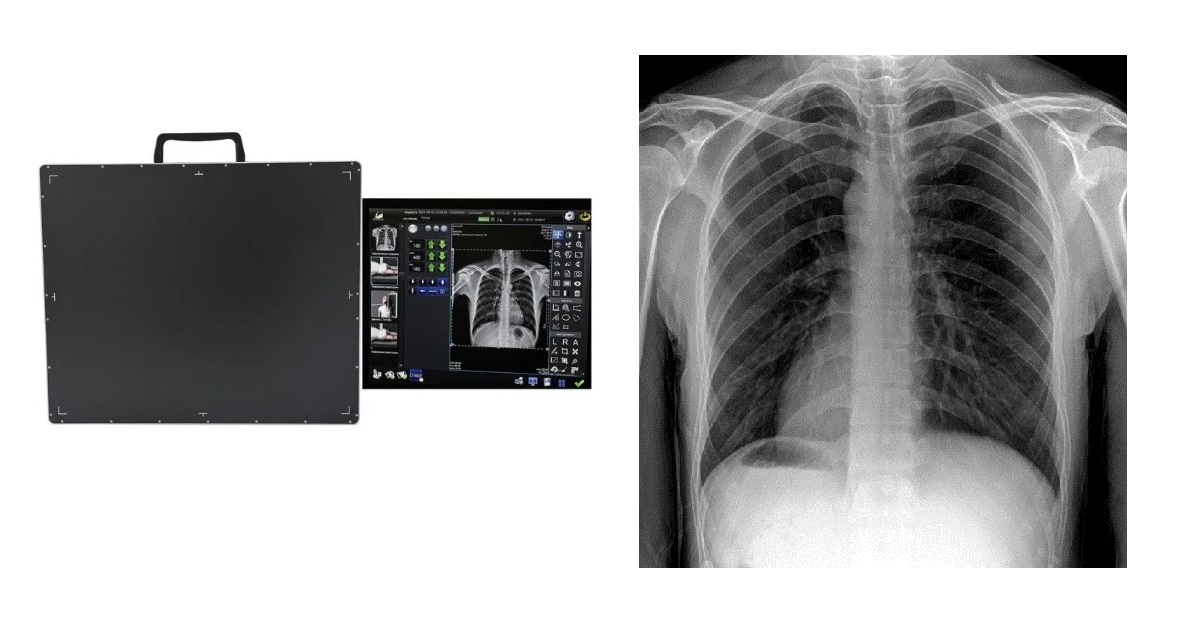
The onboard image processing system solves these drawbacks automatically. Once the detector transfers digital data, embedded algorithms start real‑time calculation immediately. The system carries out intelligent noise filtering to erase random particle interference without blurring bone edges or soft tissue textures. It balances brightness distribution across over‑exposed bright zones and under‑exposed dark areas, making the whole picture uniformly bright instead of patchy. Advanced virtual grid technology is also integrated to suppress scattered rays, an effect similar to a physical anti‑scatter grid, which further improves definition and avoids muddy, low‑contrast images. All optimization steps finish within several seconds, and technicians can view diagnostic‑ready photos on the local monitor instantly.
Many buyers underestimate the value of integrated image processing and only focus on tube power or detector size. In actual daily use, image quality directly decides whether a mobile X‑ray machine can serve clinical demands well. Some low‑end mobile X‑ray devices leave all image adjustment to manual post‑editing on external computers. Operators have to spend extra time tuning brightness and contrast, and inconsistent manual settings easily cause unstable imaging quality. Worse still, poor raw images may force repeated exposure, raising radiation risks for patients and medical staff.
A mobile X‑ray machine with native image processing brings obvious practical advantages. First, it realizes one‑shot qualified imaging. Even in unfavorable environments with limited space or unstable power supply, the built‑in processor stabilizes output quality and reduces retake rates. Second, the clean, bright radiographs display tiny fractures, soft tissue lesions and catheter positions clearly, supporting accurate on‑site judgment for emergency treatment. Third, the whole workflow becomes simpler. No extra external workstation or complicated software installation is required. Doctors complete shooting, viewing and preliminary assessment on one mobile trolley, which perfectly matches bedside rounds, home medical visits, on‑site rescue and temporary clinic scenarios.
It is also important to distinguish genuine embedded processing from simple display brightness adjustment. True built‑in image processing relies on professional medical imaging chips and anatomically optimized algorithms, rather than merely lifting screen brightness. Simple brightening cannot remove radiation noise, and over‑boosted brightness will introduce artifacts and mislead diagnosis. Reliable mobile X‑ray equipment adopts medical‑grade processing programs preset for chest, limb and torso examinations, offering targeted optimization for different body parts.
For medical facility purchasers, image processing capability deserves high priority during selection. If your team often carries out mobile radiography away from standard radiology rooms, a mobile X‑ray machine with integrated image processing will deliver stable clean and bright images and improve overall diagnostic efficiency. As mobile medical services keep developing, intelligent built‑in imaging technology will become a standard configuration for high‑performance mobile X‑ray systems. It breaks the quality gap between mobile and fixed radiography units and enables dependable imaging service wherever patients need it.
Post time: Sep-05-2026