

Mobile veterinary radiography has completely transformed modern animal healthcare, solving the pain points of traditional fixed radiographic equipment. For mobile vet teams, rural farm inspections, emergency animal rescue, and small community clinics, handheld X-ray equipment has become the core tool for on-site diagnostic imaging. It eliminates the limitations of fixed X-ray rooms, allowing accurate, low-dose radiographic scanning directly on-site for pets and livestock. This article explores the value, working logic, core application scenarios, and practical operational advantages of handheld X-ray devices in mobile veterinary radiography.
What Is Mobile Veterinary Radiography
Mobile veterinary radiography refers to flexible, on-site X-ray imaging diagnosis without relying on fixed hospital equipment and professional shielding rooms. Different from conventional stationary DR systems that require animal transfer and fixed-site shooting, mobile radiography focuses on moving equipment instead of animals.
This imaging mode is especially suitable for large livestock, injured, aggressive, or stressed animals that cannot be easily transported. It effectively avoids secondary injuries and emotional stress caused by handling and transportation, while greatly improving the efficiency of field diagnosis and treatment. Handheld X-ray machines are the most mainstream portable equipment for current mobile veterinary radiography solutions.
Working Principle of Handheld X-Ray for Veterinary Use
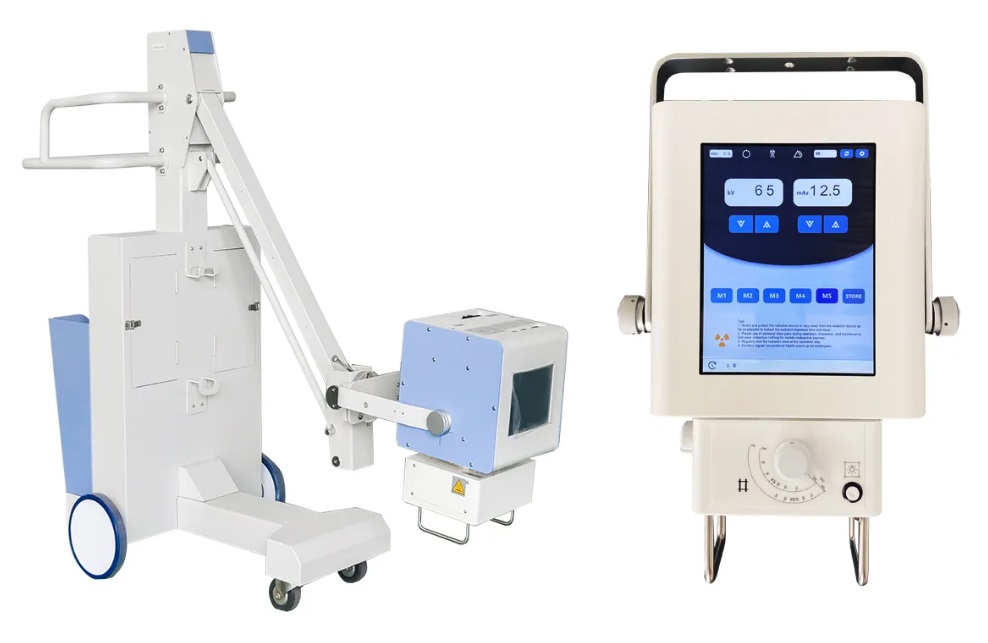
The imaging principle follows standard X-ray radiography technology, optimized and miniaturized for mobile scenarios. The handheld device integrates a miniature high-frequency X-ray generator, precision X-ray tube, intelligent control panel, and built-in rechargeable battery module.
After starting the device and setting parameters according to the animal’s body thickness, the X-ray tube emits stable penetrating rays. Dense animal tissues such as bones and joints absorb more rays, while soft tissues like muscles and internal organs allow more rays to pass through. The matched veterinary flat panel detector receives the penetrated rays and converts them into high-definition digital images in real time.
Different from industrial and medical equipment, veterinary handheld X-ray machines are equipped with exclusive animal parameter presets. Users can quickly switch parameters for small pets and large livestock, realizing fast imaging and meeting the diverse diagnostic needs of mobile veterinary scenarios.
Core Advantages in Mobile Veterinary Scenarios
1. Zero Space Limitation, Suitable for All Scenarios
Traditional X-ray equipment requires professional shielding rooms and fixed placement, with high site transformation costs. Handheld veterinary X-ray machines are lightweight and portable, requiring no fixed installation or dedicated radiography room. They can be freely used in farms, family pet homes, outdoor rescue sites, and temporary diagnosis points, fully adapting to the mobile working mode of veterinary teams.
2. Reduce Animal Stress and Secondary Damage
For sick, injured, or fierce animals, long-distance transportation and fixed-site examination will cause severe stress response, and even aggravate fractures and trauma. Mobile radiography with handheld equipment completes imaging on the spot, avoiding unnecessary handling and transportation, which is more humane and ensures the accuracy of real physical condition diagnosis.
3. Efficient Imaging, Improve Service Efficiency
The device supports one-click parameter presetting and wireless image transmission. After shooting, high-definition images can be quickly synchronized to tablets and computers without film development waiting. Veterinarians can complete lesion observation, fracture judgment, and foreign body detection on-site, realizing immediate shooting and immediate diagnosis, greatly improving the efficiency of door-to-door diagnosis and emergency treatment.
4. Safe and Low-Dose, Standard Radiation Protection
Professional handheld veterinary X-ray machines adopt precise beam collimation technology, which can accurately control the radiation range and reduce unnecessary radiation exposure to animals and surrounding environments. Equipped with an anti-misoperation exposure switch, it automatically stops radiation when released, effectively protecting the safety of operators and solving the radiation safety risks of mobile unbounded shooting.
Main Application Scenarios
First, household pet door-to-door diagnosis, suitable for pet fracture examination, joint disease screening, and foreign body detection. Second, large-scale livestock farm inspection, providing batch physical examination and injury detection for cattle, sheep, horses and other large animals. Third, outdoor animal emergency rescue, providing rapid imaging diagnosis for wild animals and injured stray animals. Fourth, small clinic auxiliary diagnosis, making up for the lack of fixed X-ray equipment in small and medium-sized veterinary clinics.
Practical Usage Tips for Mobile Radiography
In mobile operation, operators should select matching kV and mAs parameters according to the animal’s size and body thickness to avoid blurred images caused by unreasonable parameters. For thick body parts, supporting a professional veterinary anti-scatter grid can effectively filter scattered rays and improve image contrast. In addition, fully charge the battery before going out to ensure continuous outdoor shooting, and standardize protective operations to ensure safe and stable mobile diagnosis.
Conclusion
Handheld X-ray equipment is an indispensable core tool for modern mobile veterinary radiography. It breaks through the site and equipment limitations of traditional veterinary imaging, with the advantages of portability, high efficiency, safety and low stress. It not only optimizes the veterinary service process and improves diagnostic accuracy, but also expands the service scope of mobile veterinary teams, bringing more flexible and professional imaging diagnostic solutions for animal healthcare.
Post time: Sep-23-2026