

In conventional medical imaging practices, there is a long-held assumption that radiographic examinations must be performed in dedicated radiology departments with custom-built rooms and large stationary equipment. For bedridden critically ill patients, elderly people with limited mobility, pre-hospital emergency cases, and individuals receiving outdoor health screenings, cumbersome transfer procedures and fixed site constraints often delay diagnosis and treatment and increase clinical risks.
The growing adoption of handheld DR (handheld digital radiography systems) has completely transformed the traditional imaging examination model. It breaks through multiple barriers of location, equipment, and application scenarios, extending professional diagnostic imaging capabilities beyond radiology rooms to bedside and on-site settings. As a core tool for primary care, emergency medical services, public health screenings, and specialized clinical scenarios, it has redefined the standard for lightweight, efficient medical imaging diagnosis.
1. Moving Beyond Traditional Constraints How Handheld DR Reshapes Imaging Care
For a long time, standard fixed DR systems in hospitals have been bulky and complicated to install, requiring dedicated lead-shielded rooms and supporting power infrastructure. Their lack of mobility limits them to routine in-hospital imaging procedures. Even conventional mobile DR carts face drawbacks such as heavy weight, restricted maneuverability, and inability to operate in tight spaces, making them difficult to adapt to diverse clinical scenarios.
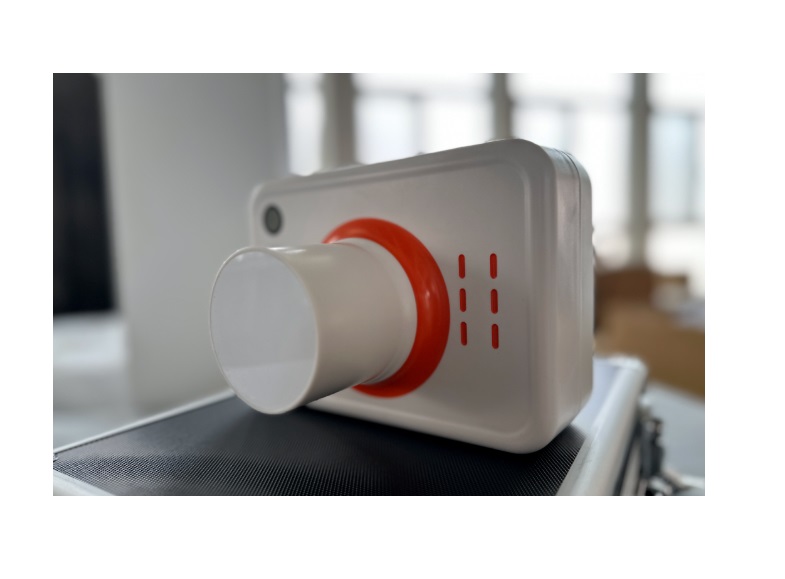
Handheld DR represents a comprehensive innovation over traditional equipment. As a highly integrated miniaturized imaging device, it incorporates three core components: a miniature high-frequency high-voltage generator, a compact X-ray tube, and a wireless flat panel detector. With a total weight of only 2.5 to 6 kilograms, it supports single-handed operation and multi-angle positioning. A single operator can complete the entire workflow — transport, positioning, exposure, and imaging — without the need for carts, fixed sites, or complex supporting facilities. It requires no dedicated room, no complicated setup, and no space restrictions, and is ready for operation immediately upon powering on.
This truly enables a new care model where the device moves to the patient instead of the other way around, fundamentally addressing the industry-wide challenge of providing imaging services for special patient populations and unique clinical settings.
2. Four Core Strengths for Enhanced Clinical Efficiency
Exceptional Portability for Flexible Deployment Across Scenarios
The lightweight, compact design allows the device to be easily stored in a protective case for transport in vehicles, home visits, and field operations. Whether in tight hospital wards, home-based elderly care settings, rural clinic sites, or field rescue and disaster relief environments, it can be rapidly deployed and put into use immediately, completely free from site and space constraints.
High-Definition Imaging for Accurate Diagnosis
Its compact size does not compromise imaging performance. Handheld DR features high-definition digital imaging technology with high resolution and clear image quality, capable of capturing subtle lesions in bones and chest structures with diagnostic accuracy comparable to large conventional DR systems. It also supports wireless real-time image transmission and instant preview, eliminating the wait for film processing and delivering results in seconds, enabling clinicians to quickly assess conditions and triage patients accurately.
Low-Dose Radiation for Enhanced Safety
Equipped with intelligent beam control and low-dose exposure technology, the device precisely regulates radiation output, significantly reducing radiation dose while maintaining image quality. When paired with dedicated protective accessories, it protects both patients and medical staff from excessive radiation exposure, making it suitable for sensitive populations such as children, the elderly, and frail patients.
Cost Efficiency for Primary Care Settings
Compared to the high costs of room renovation and equipment maintenance associated with traditional DR systems, handheld DR requires no dedicated shielded room, has zero deployment barriers, features simple maintenance and low power consumption, and greatly reduces capital investment and site costs for healthcare facilities. With long battery life supporting extended continuous operation, it is perfectly suited for high-volume screening in primary care clinics, community health centers, and health screening organizations.
3. Versatile Applications Across the Full Spectrum of Healthcare Services
With its core strengths of flexibility, efficiency, and accuracy, handheld DR has long expanded beyond traditional radiology departments into a wide range of clinical scenarios, serving as a critical tool for extending healthcare services to underserved areas and upgrading emergency response capabilities.
In-hospital bedside imaging For critically ill patients in ICUs, post-operative bedridden patients, and patients with mobility impairments due to fractures, chest and skeletal imaging can be performed directly at the bedside without patient transfer. This avoids exacerbation of conditions and infection risks associated with transportation, greatly improving diagnostic safety and efficiency.
Pre-hospital emergency care It is suitable for pre-hospital emergency services, motor vehicle accidents, field disaster relief, and public health emergencies. Rapid on-site imaging screening allows quick identification of fractures, chest injuries, and other conditions, saving critical time for emergency treatment, triage, and transfer.
Primary care public health screenings It adapts to large-scale public health services such as rural outreach clinics, community health check-ups, campus screenings, and corporate physical examinations. The device can be used on demand to efficiently perform imaging screenings for large populations, supporting early disease detection and chronic disease management at the primary care level.
Home care and specialized clinical services For homebound elderly individuals with disabilities, people with impairments, and long-term bedridden patients, imaging examinations can be delivered to the home, bridging the last mile of healthcare services and allowing special populations to access professional diagnostic imaging without leaving their residences.
Veterinary medicine Handheld DR is also widely used in veterinary hospitals for skeletal and chest imaging of various animals. Its compact size fits the limited operating space of veterinary clinics, advancing the development of lightweight, precise imaging in veterinary care.
4. Empowering Primary Care with Technology to Safeguard Public Health
Advancements in medical technology have always aimed to make diagnosis and treatment more efficient and accessible. The evolution from large fixed-room systems to agile handheld DR represents more than just an equipment upgrade — it is a transformation in healthcare delivery philosophy: ensuring that high-quality imaging resources are no longer confined to large hospitals, and that accurate diagnosis reaches more scenarios and more people.
Against the backdrop of county-level medical community construction, primary care quality improvement, and the enhancement of public health emergency systems, handheld DR, with its core advantages of light weight, high precision, strong adaptability, and low cost, has become a critical asset for addressing gaps in primary care, improving emergency diagnostic capabilities, and extending healthcare services to underserved areas, building a robust imaging diagnostic foundation for public health.
Looking ahead, as medical equipment continues to advance toward domestic production, lightweight design, and intelligent functionality, handheld DR will expand into more specialized medical scenarios. Powered by technological innovation, it will enable precision medicine and make high-quality, convenient diagnostic imaging services accessible to all.
Post time: Sep-08-2026