

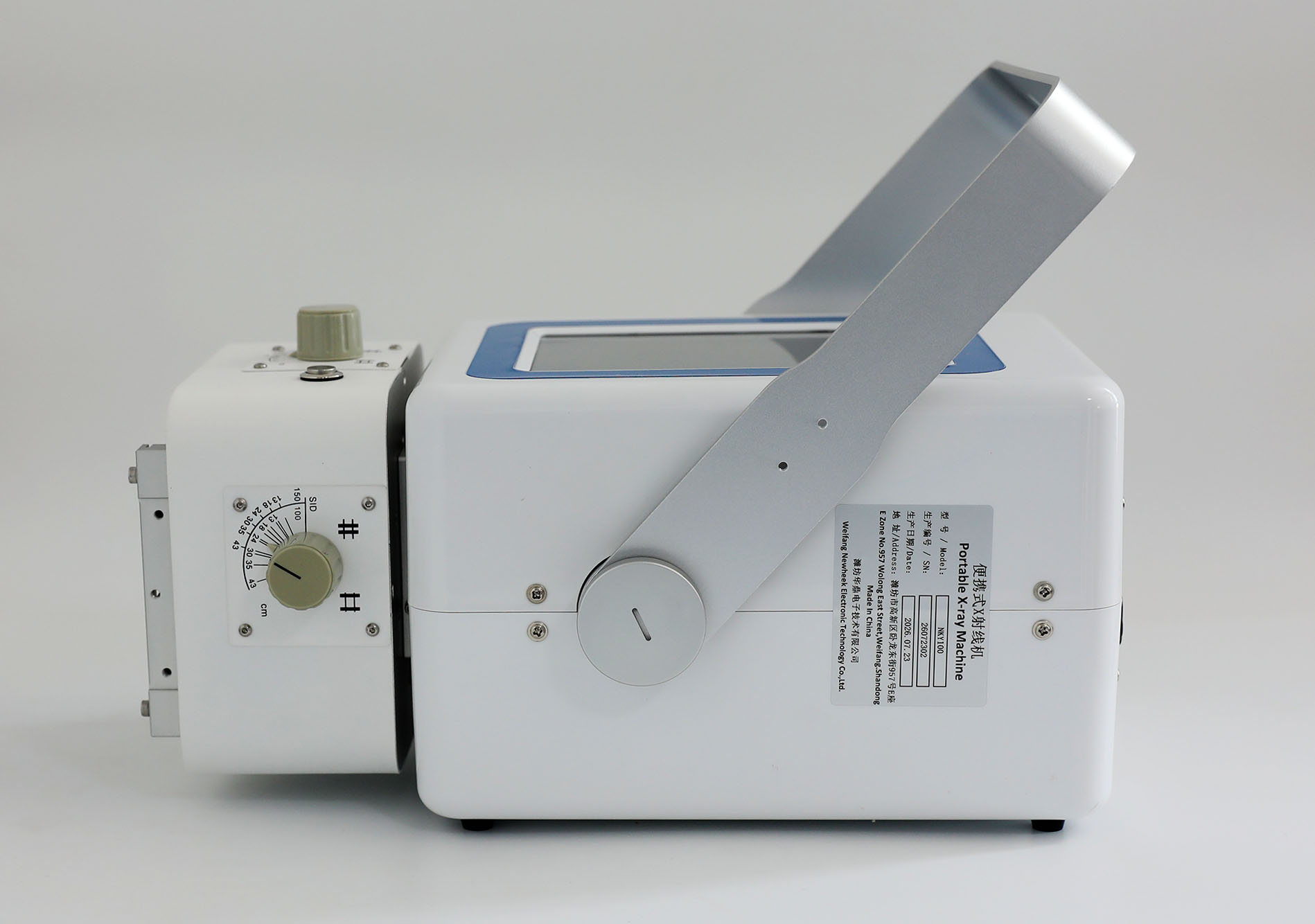
Modern pet hospitals prioritize accurate diagnosis, animal safety, and efficient clinical workflows, making radiation dose control a core concern in veterinary radiology. Traditional X-ray equipment often delivers excessive redundant radiation, causing unnecessary radiation exposure for pets and posing potential safety risks for long-term operating veterinarians. The low dose handheld veterinary X-ray unit has become an upgraded essential device for pet hospitals, balancing high-definition diagnostic imaging, ultra-low radiation output and flexible mobile operation. It perfectly adapts to daily pet examination, emergency diagnosis and on-site imaging needs of modern pet medical institutions.
Working Principle of Low Dose Handheld Veterinary X-Ray Unit
Different from conventional portable X-ray devices that pursue high power output simply, low dose handheld veterinary X-ray units adopt optimized high-frequency micro-focus X-ray technology. The equipment is equipped with a precision miniature X-ray tube and intelligent dose control chip, which can accurately adjust kV and mA parameters according to pet body type, tissue thickness and imaging parts.
Through precise beam collimation and intelligent radiation filtering technology, the unit effectively filters redundant scattered rays and low-energy invalid rays. It only outputs effective penetrating rays required for imaging, minimizing useless radiation while ensuring sufficient imaging penetration. The matched high-sensitivity veterinary flat-panel detector can capture weak ray signals efficiently, realizing high-clarity imaging with low radiation dose, which solves the core contradiction between radiation safety and imaging quality in pet radiography.
Core Advantages for Pet Hospital Applications
1. Ultra-Low Radiation, Safer for Pets and Operators
Pets such as cats and dogs have delicate body tissues and are more sensitive to ionizing radiation. Long-term or multiple high-dose imaging may cause potential health hazards. This low dose X-ray unit strictly controls effective radiation output, far lower than the radiation dose of ordinary portable X-ray equipment. It greatly reduces radiation damage to pets, and avoids cumulative radiation risks for veterinarians who perform imaging operations frequently. Meanwhile, the built-in shielding structure further suppresses ray leakage, meeting the safety operation standards of professional pet hospitals.
2. Portable & Flexible, Optimize Clinical Workflow
Integrating miniaturized design and built-in rechargeable battery, the handheld unit is lightweight and easy to carry, without relying on fixed X-ray rooms and wiring environments. Veterinarians can complete imaging diagnosis at pet cages, diagnosis tables and emergency treatment sites, avoiding secondary stress and injury caused by transporting sick, injured or frightened pets. It effectively improves the diagnosis efficiency of fracture, foreign body, thoracic and abdominal lesions, and enriches the service scenarios of pet hospitals.
3. Intelligent Parameter Matching, Stable High-Quality Imaging
The device is preset with exclusive imaging parameters for small animals, covering routine imaging needs of different body parts of cats and dogs. Even inexperienced operators can complete one-click parameter matching to obtain clear and uniform radiographic images. The micro-focus imaging technology ensures delicate display of pet bone lines, soft tissue structures and tiny lesions, providing accurate imaging basis for disease diagnosis, surgical planning and postoperative reexamination.
Main Clinical Application Scenarios
The low dose handheld veterinary X-ray unit covers all daily imaging scenarios of pet hospitals. It is widely used for orthopedic examination of pet limb fractures, joint dysplasia and bone lesions. It can also accurately detect gastrointestinal foreign bodies, thoracic and abdominal organ lesions, and assist in the diagnosis of respiratory and systemic diseases. In addition, it is suitable for pet preoperative routine imaging screening and postoperative recovery reexamination, realizing full-cycle imaging diagnosis for pet diseases.
For special pets such as elderly, sick and stressed animals that are not suitable for moving and long-time fixed shooting, the low-dose mobile imaging mode can greatly reduce pet discomfort and improve the success rate of one-time imaging, avoiding repeated shooting and secondary radiation exposure caused by blurred images.
Practical Operation Tips for Pet Hospitals
To give full play to the advantages of low-dose imaging, pet hospitals need to standardize operation specifications. First, select matched preset parameters according to pet size and imaging parts to avoid image noise caused by inappropriate parameters. Second, keep a standard source-to-image distance to ensure imaging uniformity and prevent image distortion. Third, cooperate with professional scattered ray filtering accessories when shooting thick tissue parts to further improve image contrast without increasing radiation dose.
In daily use, regular equipment calibration and safety detection can maintain stable low-dose output and long-term imaging stability, helping pet hospitals form standardized, safe and efficient imaging diagnosis procedures.
Conclusion
The low dose handheld veterinary X-ray unit is a practical and safe imaging device tailored for modern pet hospitals. It breaks the limitations of traditional X-ray equipment in radiation safety and scene application. With ultra-low radiation output, portable flexible operation and high-precision imaging capability, it not only protects the physical health of pets and medical staff, but also greatly improves the efficiency and professionalism of pet medical imaging diagnosis. It is an indispensable upgrading equipment for standardized and high-quality operation of pet hospitals.
Post time: Sep-28-2026