

In modern clinical and emergency medical services, diagnostic efficiency and scene adaptability are critical to treatment outcomes. Traditional fixed X-ray machines rely on dedicated radiology rooms with fixed installation and complex operation processes, which cannot meet the needs of on-site, bedside and outdoor emergency examinations. As a portable and innovative imaging device, handheld X-ray machines perfectly solve the limitations of traditional equipment, making medical diagnosis more convenient, flexible and rapid, and are widely used in primary hospitals, emergency rescue, home medical care and field medical scenarios.
The working principle of handheld X-ray machines follows the core physical imaging logic of conventional X-ray equipment, with optimized miniaturized and low-dose technological design. The device generates controllable low-energy X-rays through an internal high-frequency X-ray tube after parameter calibration. Different human tissues and bones absorb X-rays at varying rates; dense bone structures block more rays and form high-contrast bright areas on the digital detector, while soft tissues such as muscles and organs allow more rays to pass through and form dark areas. Finally, high-definition grayscale images are formed through intelligent algorithm processing, realizing intuitive and accurate lesion observation. Different from bulky fixed equipment, it adopts integrated circuit miniaturization technology, which stabilizes imaging quality while greatly reducing volume and weight.
The biggest advantage of handheld X-ray machines lies in their flexible mobility and efficient diagnosis capability. Traditional X-ray examinations require patients to move to a fixed radiology room, which is extremely inconvenient for critically ill patients, orthopedic injured patients, elderly and disabled groups. Handheld X-ray machines can be carried by medical staff and operated directly at the diagnosis site, completing imaging shooting in seconds. This omits the links of patient transfer and equipment debugging, greatly shortens the diagnosis cycle and effectively avoids secondary injuries caused by patient movement.
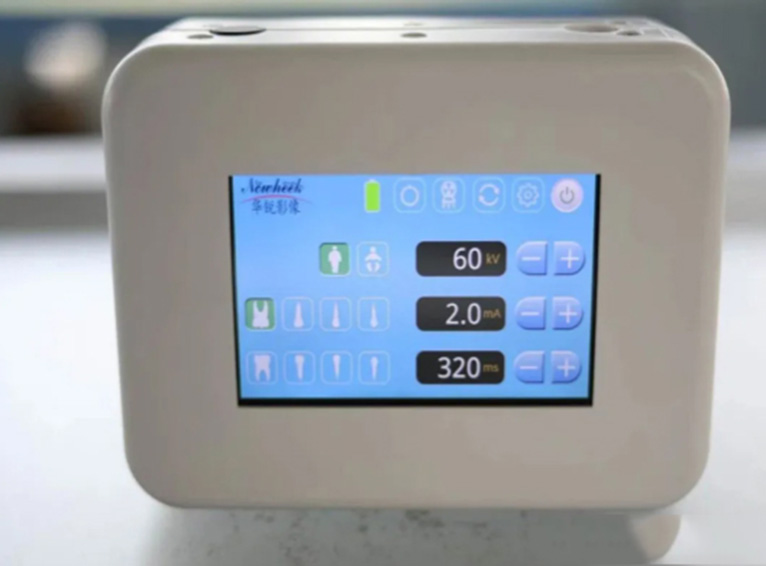
In terms of core performance and safety, modern handheld X-ray machines have reached mature medical standards, breaking the industry stereotype that portable devices have poor imaging quality and high radiation. Equipped with precise kVp and mAs parameter adjustment systems, the devices can adapt to different shooting parts and human body types. The built-in anti-scattering structure and low-dose radiation technology effectively reduce stray radiation, realizing safe radiation protection for both patients and operators. Meanwhile, the high-resolution digital imaging system can clearly display tiny fractures, subtle lung lesions and tissue abnormalities, fully meeting the clinical preliminary diagnosis and daily screening standards.
This equipment covers a wide range of practical application scenarios with strong industrial practical value. In hospital bedside diagnosis, it is suitable for postoperative reexamination of bedridden patients and real-time monitoring of rehabilitation conditions. In pre-hospital emergency and field rescue, it can quickly complete fracture judgment and visceral lesion screening for wounded persons, providing accurate imaging basis for on-site first aid. In grassroots medical institutions and mobile medical vehicles, it makes up for the lack of fixed radiology equipment, improving the coverage of basic imaging diagnosis. In addition, it is also widely used in sports injury detection, home health care and other scenarios, realizing diversified and convenient medical imaging services.
With the continuous upgrading of medical portable technology, handheld X-ray machines have become an indispensable auxiliary diagnostic device in the modern medical industry. Its advantages of portability, rapid imaging, safe radiation and wide adaptability not only optimize the medical diagnosis process and improve clinical work efficiency, but also break the spatial limitation of traditional imaging diagnosis. While ensuring professional and accurate diagnostic results, it brings more convenient and efficient medical services to patients, and promotes the intelligent and popular development of grassroots and emergency medical imaging.
Post time: Aug-13-2026