

High-definition X-ray imaging has become commonplace across hospital radiography, public security screening and industrial quality inspection. Few people know that Flat Panel Detectors (FPDs), the core precision component behind all digital radiographic outputs, underpin modern digital imaging. As a pivotal precision sensor for X-ray imaging systems, FPDs have fully replaced traditional film-based radiography and gained extensive adoption in medical care, industrial nondestructive testing, security inspection and multiple other sectors. This article elaborates on the core strengths and practical value of this “X-ray vision sensor” in plain language.
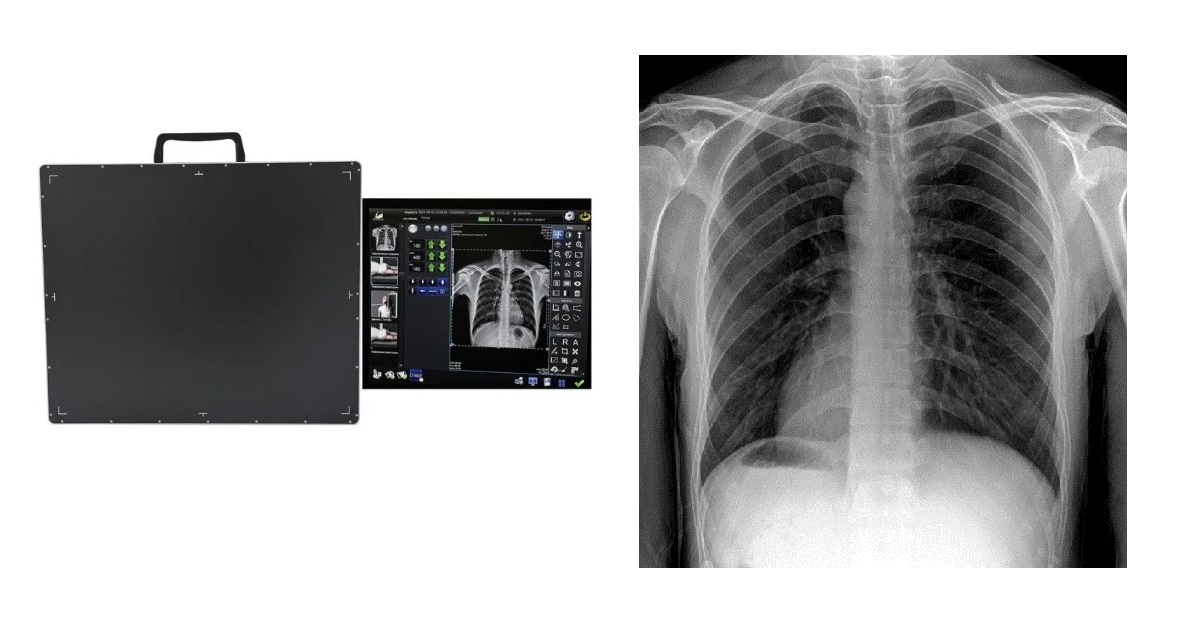
A flat panel detector is a sophisticated sensor that converts incoming X-ray radiation directly into digital images. Serving as the core component of digital radiography (DR) systems, X-ray machines, security scanners and industrial flaw detection equipment, it fundamentally determines key imaging indicators including image definition, imaging speed and permissible radiation dosage.
Compared with conventional film radiography that requires complicated chemical developing procedures, FPDs deliver instant imaging, on-demand image output and digital data archiving, pushing radiographic equipment from analog to digital era. Acting like a high-sensitivity digital retina, these detectors accurately capture X-ray signals and generate high-clarity digital images. Based on internal imaging mechanisms, FPDs fall into two primary categories: indirect conversion detectors and direct conversion detectors, with differentiated technical features tailored for diverse application scenarios.
Indirect Conversion FPD: Mainstream Widely Adopted Technology
Representing the most mature and dominant technology in the global market, indirect conversion detectors adopt amorphous silicon, IGZO or CMOS as core substrate materials. The working process starts with scintillator materials transforming X-ray photons into visible light; subsequent photoelectric pixel arrays convert visible light into electrical signals before final digital image formation.
Key merits include outstanding operational stability, favorable cost performance, fast imaging speed and robust service durability, making this type ideal for routine hospital radiography, public transit security scanning and general industrial quality inspection. Its only limitation stems from minor optical scattering during light conversion, leading to slightly compromised ultra-high spatial resolution.
Direct Conversion FPD: Premium-Grade Detector for Ultra-Precision Scanning
Fabricated with amorphous selenium (a-Se) as core sensitive material, direct conversion FPDs skip the intermediate visible-light conversion step and transform X-ray radiation into electric signals straightaway, eliminating any image distortion caused by light scattering.
Boasting superior spatial resolution and exquisite microscopic detail reproduction capability, direct conversion detectors are reserved for high-precision inspection tasks. However, complicated manufacturing craftsmanship and high production costs restrict its large-scale popularization; typical applications cover mammography screening and precision component nondestructive flaw testing requiring top-tier imaging accuracy.
Beyond medical radiology, flat panel detectors have expanded into cross-industry sectors, securing safety standards and product quality via precise radiographic imaging performance.
1. Medical Radiology: Core Equipment for Clinical Healthcare
Medical diagnosis remains the largest application field of FPDs, covering general skeletal radiography, chest X-ray, dental radiography, interventional surgery fluoroscopy and mammography screening.
Latest-generation FPD products effectively lower patient radiation exposure, minimizing bodily harm while maintaining diagnostic precision. Real-time dynamic imaging functionality greatly accelerates emergency diagnosis and minimally invasive surgical operations, forming the foundational hardware of contemporary digital medical imaging.
2. Industrial Non-Destructive Testing: Strict Gatekeeper for Manufacturing Quality
FPD-based X-ray inspection is extensively deployed in aerospace, automotive manufacturing, electronics production and weldment testing. It pinpoints invisible internal defects such as air voids, material cracks and foreign inclusions inside finished products. Replacing inefficient manual inspection workflows, FPD technology upgrades inspection accuracy and throughput significantly to support refined quality control in high-end manufacturing.
3. Public Security Screening: Reliable Safeguard for Mass Transit & Events
FPDs function as the central imaging core inside baggage scanners installed at airports, metro stations and large-scale exhibitions. They render clear internal baggage structures rapidly to help inspectors identify prohibited items efficiently, balancing strict safety control and smooth passenger passage.
4. Scientific Research & Specialized Fields
With ultra-high precision and low image distortion characteristics, FPDs supply credible imaging data for material science research, archaeological nondestructive examination and precision instrument calibration and other cutting-edge research projects.
For decades, the high-end global FPD market was long dominated by overseas manufacturers. Thanks to continuous domestic R&D breakthroughs on core technologies, Chinese manufacturers have realized full industrial chain localization and broken overseas technical monopolies.
Currently, domestically produced flat panel detectors match international mainstream performance benchmarks. Driven by competitive pricing and localized after-sales service networks, homegrown FPD products are widely deployed in grassroots medical institutions, industrial testing and public security sectors, steadily accelerating domestic substitution against imported counterparts.
Looking ahead, fueled by AI-powered image optimization, lightweight structural design and ultra-low radiation optimization technologies, flat panel detectors will evolve toward higher precision, intelligent operation, portable size and low power consumption, unlocking brand-new application possibilities across emerging industries.
Post time: Jun-04-2026