

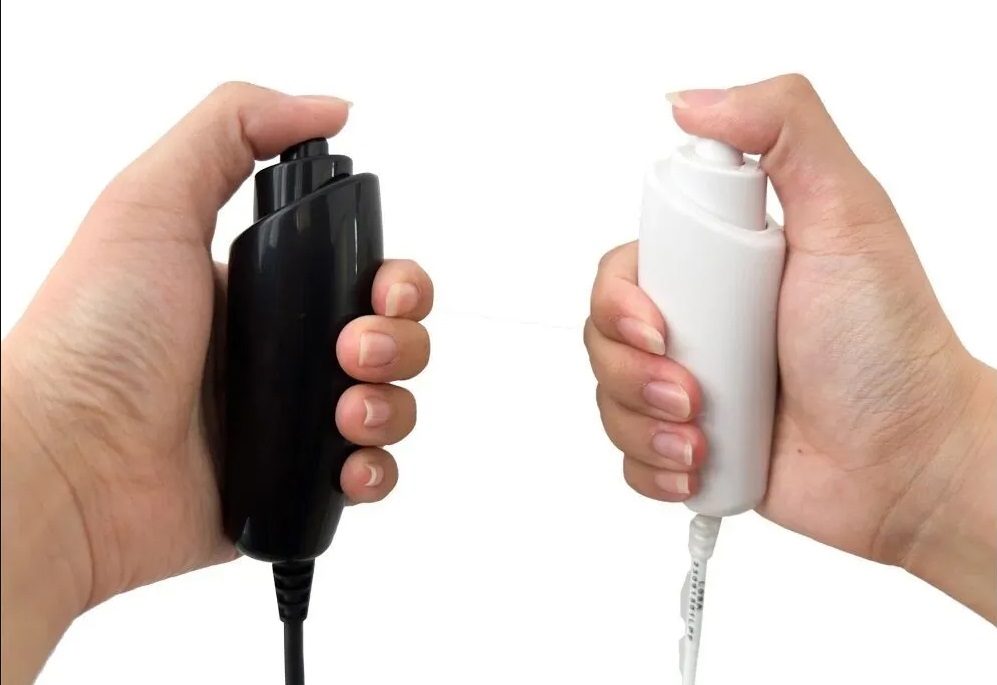
In radiography examinations, the X-ray exposure hand switch is an easily overlooked yet essential core component. Though it looks like a simple handheld button, it serves as a key device for radiographers to ensure image quality and protect both medical staff and patients from radiation risks. Every standard operation is closely linked to examination safety and equipment service life. This small hand switch embodies professional standards and safety principles for radiological procedures. Below we elaborate on its working principle, standard operations and precautions for your reference.
Many people mistake the hand switch for a one-click shooting button. In fact, mainstream medical X-ray machines are equipped with two-stage segmented hand switches. This dual-stage design is a critical safety feature of medical devices, and both steps are indispensable.
Stage 1: Standby and Equipment Preparation
Press and hold the switch to the first stage. The device enters standby mode: the X-ray tube anode runs at high speed, the filament preheats and boosts voltage, and the system completes circuit self-inspection and calibration. This process eases equipment load, prevents damage caused by sudden high voltage impact, stabilizes imaging parameters and reduces defective films.
Stage 2: Trigger Exposure and Complete Imaging
Keep holding the switch at the first stage, then press further to the second stage to activate official X-ray exposure. Do not release the switch during exposure. Letting go will immediately interrupt the exposure, resulting in incomplete imaging and invalid scans.
To sum up: First stage for equipment standby, second stage for X-ray exposure. Note that dental X-ray machines generally adopt single-stage hand switches to adapt to clinical requirements of dental examinations.
The two-stage design is not a redundant procedure, but a triple safety barrier for radiation protection, equipment maintenance and high-quality imaging. Its core advantages are as follows:
1. Prevent Accidental Activation to Protect Patient Safety
The dual-stage structure effectively avoids accidental exposure during patient positioning and equipment adjustment. It ensures all X-ray emissions are fully controlled, minimizing unnecessary radiation exposure for patients.
2. Reduce Equipment Load to Extend Service Life
The standby stage allows the X-ray tube rotation speed and filament temperature to rise steadily. It avoids instant high voltage and current impact, lowers wear on precision parts, and cuts down equipment failure rates and maintenance costs.
3. Stabilize Imaging Parameters to Improve Work Efficiency
After full preheating and self-check, the equipment delivers accurate exposure parameters and clear images. It effectively reduces artifacts and blurry films, avoids repeated scans and improves overall diagnostic efficiency.
Despite its simple operation, improper use will damage the device, compromise image quality and bring potential safety hazards. New operators must avoid the following common mistakes:
Mistake 1: Press two stages continuously and skip the standby process
Pressing the switch all the way down directly skips the standby phase. Unqualified imaging parameters will lead to defective films. Long-term improper operation will severely wear the X-ray tube and shorten the equipment lifespan.
Mistake 2: Release the switch or press repeatedly during exposure
Releasing the switch mid-exposure causes incomplete images. Frequent start-stop operations trigger repeated high voltage impacts, accelerating aging of circuits and internal components. Correct operation: Hold the switch steadily until exposure is finished.
Mistake 3: Rough pressing and improper storage
The hand switch is built with precision micro switches. Rough pressing, wire pulling and extrusion will cause gear failure, wire breakage and button jamming. Always press gently and store the switch properly after use.
Mistake 4: Force exposure when the equipment is not ready
Do not activate exposure if the indicator light is off, the device shows error alerts or the patient’s position is not fixed. This will result in scan failure, increase equipment load and trigger potential malfunctions and safety risks.
The compact X-ray exposure hand switch is a fundamental yet vital safety component in radiology departments, governing radiation safety, imaging quality and equipment protection.
Standardized operation of the hand switch reflects the professionalism of radiographers. Standard procedures not only protect patients and produce high-quality images, but also maintain equipment and reduce wear and tear.
It acts as a radiation safety lock for patients, a load buffer for medical equipment, and a reflection of rigorous professionalism among radiology practitioners.
Post time: May-26-2026