

Many people wonder why X-ray and DR films turn out sharp and haze-free even after radiation passes through the human body. While flat panel detectors and advanced imaging algorithms earn most credit, a humble yet vital component inside radiology equipment is often overlooked — the anti-scatter grid.
This slim embedded plate acts like a professional retouch filter for X-ray scans. It eliminates scattered rays and purifies imaging details. Without this essential part, even high-end radiography devices fail to produce qualified diagnostic images. Let’s explore this hidden workhorse in medical imaging.
What Is an Anti-Scatter Grid?
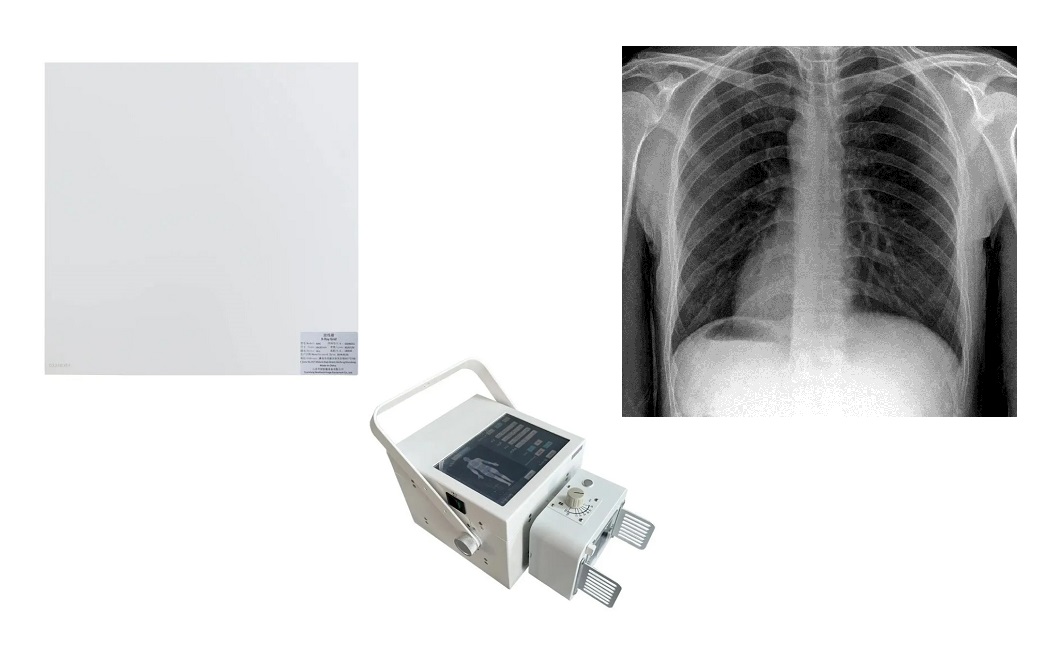
An anti-scatter grid is an anti-scattering device installed between the human body and the detector. It measures merely 4 to 8 millimeters in thickness with an ingenious internal structure.
Countless ultra-thin lead strips are neatly arranged inside the grid. Low-density radiation-permeable materials fill gaps between lead strips, and protective panels seal the whole component. Its structure resembles a miniature louver, executing precise ray screening through physical design.
Faint fine grid lines occasionally seen on film edges are not equipment malfunctions, but visible traces left by the working anti-scatter grid.
Working Principle: Preserve Valid Rays, Block Scattered Radiation
When X-rays penetrate human tissues, not all travel in straight lines. Straight primary rays outline clear bones and internal organs, whereas partial rays deflect after hitting tissues and turn into disordered scattered radiation.
Unregulated scattered rays create foggy blurriness on scans, lowering image contrast. Tiny nodules and subtle bone fractures can be concealed, raising risks of missed or incorrect diagnosis.
The anti-scatter grid operates with straightforward efficiency. Vertical valid rays pass freely through gaps between lead strips and reach the detector to form complete anatomical outlines. Slanted scattered rays get absorbed and blocked once striking lead strips.
In short, the grid retains straight rays and rejects deflected ones, physically optimizing X-ray image clarity and noise reduction.
Core Functions of Anti-Scatter Grid
Boost Imaging Quality and Diagnostic Accuracy
Scattered rays multiply sharply when scanning dense body parts such as chest, abdomen and thick limbs. Images appear hazy without grid filtering, making it impossible to identify pulmonary nodules, minor fractures and soft tissue lesions.
Equipped with an anti-scatter grid, scans gain remarkable contrast. Sharp bone edges and distinct organ layers enable physicians to spot subtle lesions and ensure accurate medical diagnosis.
Cut Retake Frequency and Reduce Radiation Exposure
Blurry defective films require repeated scanning, exposing patients to extra unnecessary radiation. The grid greatly improves one-shot imaging success rate, minimizing retake times and lowering radiation risks for both patients and medical staff while enhancing examination efficiency.
Applicable Scenarios for Anti-Scatter Grid
Grid installation is determined by body thickness and tissue density.
- Mandatory use: Chest radiography, abdominal scanning, thick limb examination and obese patient imaging. Thick body tissues generate massive scattered rays that demand grid purification.
- Unnecessary use: Hand, wrist and ankle scans. Thin body parts produce negligible scattered rays, achieving clear imaging without grids and avoiding unnecessary radiation loss.
Indispensable Basic Protection for Medical Imaging
Featuring no complex circuits or intelligent algorithms, the anti-scatter grid relies purely on physical lead strip arrangement to fulfill its duty. Less renowned than detectors and X-ray tubes, it serves as the fundamental guarantee of high-definition imaging.
From routine chest checkups and trauma bone scans to clinical lesion screening, this inconspicuous plate steadily filters interference and refines image quality. Hidden inside radiology devices, it safeguards diagnostic precision with simple but reliable structure.
Hand switches secure radiation safety, while anti-scatter grids maintain superior imaging quality. The two accessories work in synergy to support safe and precise X-ray examinations. Next time you take an X-ray scan, remember this underrated component guarding every clear medical image.
Post time: May-25-2026