

1. Overcome Traditional Drawbacks to Redefine Mobile Radiology
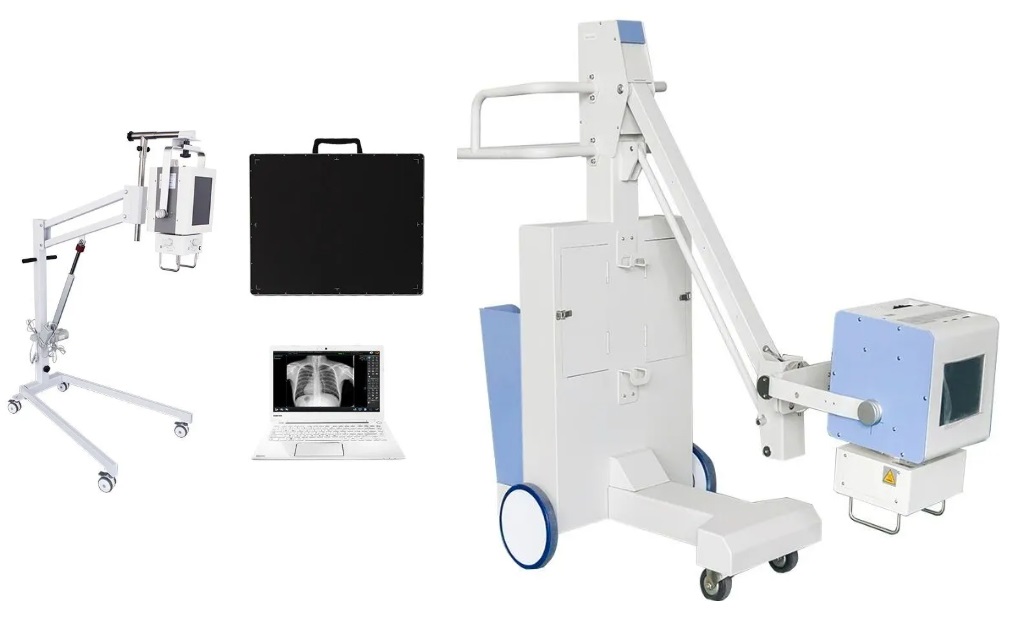
Portable DR revolutionizes conventional radiological workflows. It integrates high-frequency high-voltage generators, high-definition wireless flat-panel detectors and intelligent imaging modules. No dedicated shielded room, complicated assembly or complex debugging is required. Ready for deployment and operation anywhere, it transports complete radiology capabilities directly beside patients.
2. Four Core Advantages Balancing Efficiency and Professional Performance
Optimized structural design delivers compact, stowable and maneuverable hardware with controlled weight. One medical staff member can independently complete transportation, setup and operation without extra manpower support. It adapts to narrow and complex environments such as patient wards, corridors, rural clinics and outdoor locations, removing constraints of venue and labor.
Equipped with large-size high-resolution cesium iodide flat-panel detectors, the system offers wide imaging coverage and exceptional detail resolution. Subtle lesions in bones, thoracic tissues and soft tissue can be clearly displayed without blurring or distortion. Rapid startup enables image generation within merely 3 seconds, shortening waiting periods and boosting efficiency for emergency care and large-scale screening while supplying credible imaging evidence for clinical judgment.
Optimized high-frequency low-dose imaging technology accurately controls X-ray output, with radiation dosage far below industrial benchmarks. While preserving premium image quality, it minimizes radiation hazards to patients and medical personnel. Paired with supporting protective accessories, standardized radiation safety can be achieved during mobile radiography to deliver compliant and secure examinations.
Embedded intelligent image processing software supports noise reduction, contrast adjustment and lesion enhancement to automatically optimize radiograph quality. Wireless data transmission, local storage and report export functions allow seamless connectivity with hospital HIS and PACS systems to meet demands of digital medical management. In addition, the equipment boasts low failure rates and extended service lifespans, simplifying later maintenance and cutting overall operational expenditure for medical organizations.
3. Comprehensive Scenario Adaptation Covering Diversified Clinical Demands
In-hospital bedside examinations
For ICU admissions, post-operation bedridden patients, elderly vulnerable groups and fracture patients with mobility impairment, radiography can be conducted beside beds without transferring patients to radiology suites. This avoids risks including fluctuating vital signs, pipeline disconnection and secondary injuries during transit and improves safety standards for critical patient care.
Suited for routine examinations, chronic disease screening, senior citizen health surveys and student physical checkups at township health centers, community clinics and village medical stations. Without constructing dedicated radiology rooms, grassroots facilities can make up deficiencies in imaging capacity, advance hierarchical medical systems and enable residents to access professional radiology services locally.
Applicable for pre-hospital first aid, disaster rescue, outdoor free clinics and mobile rural outreach programs. Temporary imaging stations can be rapidly established to implement injury assessment and lesion screening, securing valuable time for emergency intervention and functioning as core hardware for mobile medical rescue.
The flexible portable unit supports physical examinations for enterprises, schools and senior care facilities. Superior mobility and fast imaging capacity facilitate radiological screening for crowds in batches, raising efficiency for standardized large-scale health assessments.
4. Empowering Inclusive Healthcare via Mobile Technology
Benefiting from lightweight architecture, professional imaging performance, multi-scenario adaptability and cost competitiveness, portable DR becomes essential hardware for grassroots medical upgrades, hospital workflow optimization and emergency healthcare security. It fuels progress of tiered medical care, inclusive healthcare and smart medical infrastructure.
Conclusion
Post time: Aug-03-2026