

Within the conventional medical imaging framework X-ray examinations generally require patients to be transferred to dedicated radiology rooms equipped with large stationary equipment. Yet for critically ill ICU patients individuals on operating tables or trauma victims in emergency wards such transfers involve tedious workflows and substantial safety risks. The emergence of Portable Digital Radiography (Portable DR) breaks the spatial and procedural constraints bringing diagnostic imaging capabilities directly beside patients.
I. What Is Portable DR From Wheeled Radiology Unit To Camera-Style Imaging
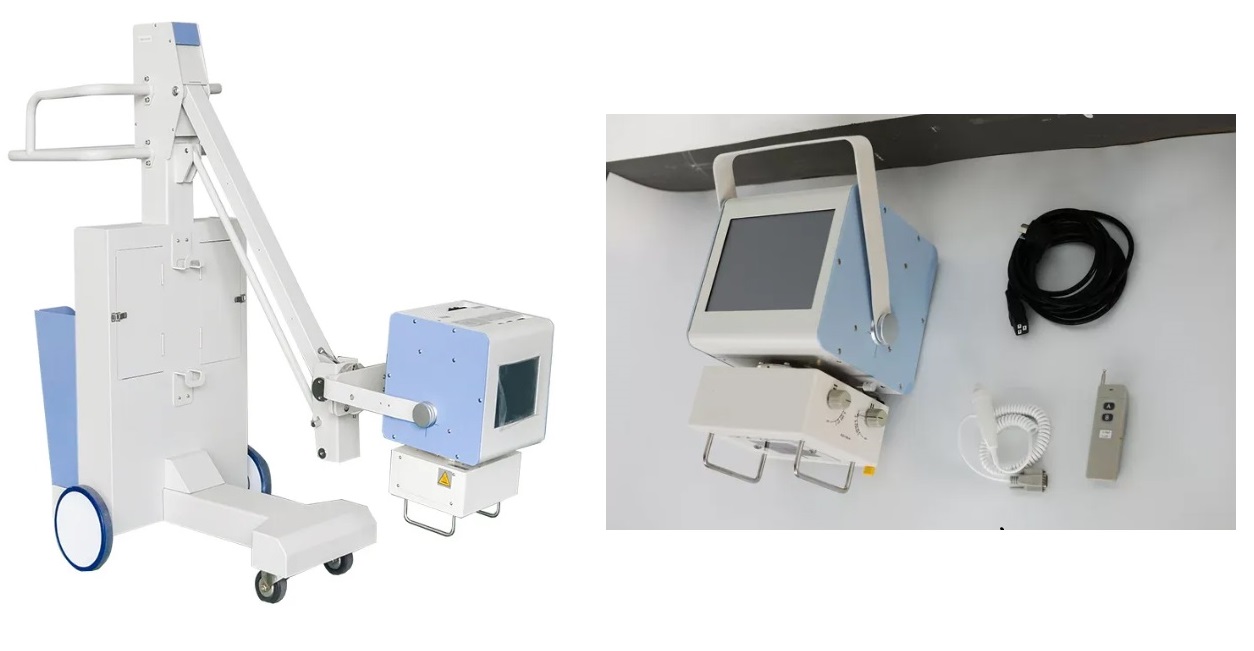
Portable DR broadly covers mobile DR handheld DR and other variants. Mobile DR formally named Mobile Digital Radiography System is a maneuverable X-ray unit integrating digital flat-panel detectors and high-performance X-ray generators. It can be wheeled to patient bedsides for radiography earning it the moniker “wheeled radiology department”. The more lightweight portable DR falls under mobile DR category. Boasting compact dimensions and easy carriage it delivers irreplaceable value for field rescue and remote clinic rounds.
A typical portable DR system comprises dedicated flat-panel detectors portable X-ray hosts embedded with X-ray tubes high voltage generators and batteries plus mobile workstations. Under exposure control the X-ray tube inside the host generates radiation which penetrates human tissues and is captured by flat-panel detectors and converted into digital signals. Data is transmitted wirelessly or via cables to workstations for processing and image generation.
II. Core Advantages Beyond Portability
Breaking Spatial Barriers To Cover Scenarios Across All Settings
Mobile DR features compact size and moderate weight with body width controlled at approximately 50 centimetres allowing easy navigation through narrow ward corridors. High-end models adopt dual motor drive and battery-powered assistance enabling smooth travel on ramps and uneven surfaces. Some newly upgraded mobile DR systems achieve a 20% smaller footprint compared with legacy units and are fitted with real-time driving cameras supporting flexible and safe movement within crowded clinical spaces.
Maximised Efficiency With Instant Image Access
Mobile DR acquires clinical images rapidly upon exposure for on-site review. Premium units generate high-definition digital images within 12 seconds. Selected models support up to 1500 exposures per full charge meeting intensive clinical workload demands. Research data indicates mobile DR achieves a 77.5% rate of grade-A diagnostic films far exceeding the 53% rate of traditional CR systems with minimal invalid exposures. Bedside radiography using mobile DR greatly improves examination success rates for critically ill emergency patients securing valuable time for clinical treatment.
Superior Imaging Performance Enabling Accurate Diagnosis
Portable DR has long discarded the stereotype of inferior image quality against fixed equipment. Equipped with advanced amorphous silicon cesium iodide wireless flat-panel detectors it delivers spatial resolution exceeding 3.4 LP/mm generating high-quality images fully compliant with diagnostic standards. Certain high-end configurations produce bedside images comparable to outputs from fixed X-ray suites. Additionally virtual grid technology further lifts the imaging standard of bedside radiography.
Low Radiation Exposure For Enhanced Safety
Portable DR emits low radiation levels enabling operation in environments without heavy shielding. On selected units the air kerma rate can be limited below 5μSv/s under parameters of 80kV,5mA and 1s further safeguarding operators and patients.
III. Wide Application Scenarios From Inpatient Wards To Off-Site Missions
Portable DR serves extensive use cases far beyond traditional radiology departments.
Bedside inpatient examination represents its primary application. Portable DR can be transported to ICUs emergency departments paediatric wards operating rooms orthopaedic wards and other clinical departments delivering instant imaging services for patients unsuitable for transfer.
Intraoperative and post-operative imaging enables clinicians to receive immediate visual feedback supporting surgical decision-making and eliminating risks associated with patient transportation.
For primary care and community medical institutions portable DR adapts to space limitations within township hospitals and community clinics and performs basic examinations without dedicated shielded rooms. China’s domestic portable DR market exceeded 3.2 billion RMB in 2025 with annual growth rate surpassing 18%.
For emergency rescue and field military medicine portable DR works independent of fixed venues and power supplies making it ideal equipment for ambulances and emergency medical teams. Selected units support wide-range 220V power supply ensuring stable operation at grassroots or field locations prone to voltage fluctuations.
Furthermore portable DR finds applications in nursing homes campus clinics and other non-specialised medical facilities and demonstrates distinct advantages within veterinary practices.
IV. Future Trends Intelligentisation Wireless Connectivity And Domestic Technology Breakthroughs
The portable DR market maintains robust growth momentum. The global mobile DR equipment market is projected to expand from 9.7 billion US dollars in 2025 to 16.8 billion US dollars by 2031 with a compound annual growth rate of 9.6%.
Such growth is driven by continuous technical innovation. Wireless connectivity stands out as a key development direction. Integration of next-generation 5G transmission technology and wireless flat-panel detectors enables seamless real-time data exchange. Artificial intelligence technology is being deeply embedded into portable DR workflows covering automatic exposure tuning intelligent image optimisation and automated lesion identification continuously improving equipment operability and diagnostic precision. Deep integration of 5G and AI is expected to cultivate new models featuring real-time image transmission plus remote robotic manipulation.
Meanwhile breakthroughs in domestic manufacturing are accelerating. The portable DR industry currently faces challenges including reliance on imported core components mounting cost pressures and incomplete industry standards. Increased investment in independent research and development of flat-panel detectors high voltage generators and other key parts to break foreign monopolies becomes vital for high-quality industrial development.
It can be foreseen that future portable DR will evolve beyond a mobile X-ray device into an intelligent efficient interconnected mobile diagnosis and treatment platform. It frees diagnostic imaging from geographical constraints and extends high-quality medical resources to populations in need across all regions.
Conclusion
From fixed radiology suites to patient bedsides from top-tier urban hospitals to remote villages portable DR dismantles geographical limitations restricting medical imaging services. It signifies not merely technological innovation but a key driver for inclusive healthcare. As technology advances and costs continue to drop portable DR will operate within more scenarios delivering accessible premium medical resources to wider populations.
Post time: Jul-29-2026