

Pet ownership is on the rise, and so are caseloads at veterinary clinics. Yet many veterinarians will tell you: with human patients, people cooperate; with cats and dogs, the hardest part of an exam isn’t making a diagnosis—it’s getting them calm enough to sit still for one.
Fractures, foreign bodies, dental issues—without imaging, many calls come down to palpation and guesswork. One wrong guess can mean a surgical mishap.
01 In Pet Clinics, the Hardest Part Isn’t Diagnosis—It’s Getting Pets to Cooperate
Pets can’t speak, and they don’t follow instructions. Getting a single radiograph often means restraint—or even sedation. Drag the process out and animals become stressed while veterinarians wear themselves down.
Space is another constraint. Many clinics simply can’t accommodate a large fixed DR room, so emergencies, fractures, and foreign bodies run into the same dilemma: you want an image, but it isn’t practical to take one.
The real pain isn’t the absence of imaging—it’s the time, risk, and emotional cost of getting a single exam done.
02 Who Needs This Kind of Equipment Most
Small and mid-sized pet hospitals and community clinics with limited floor space;
Independent veterinarians and mobile vets who frequently make house calls;
Departments handling more orthopedic, dental, and emergency cases;
Teams looking to reduce restraint and sedation while improving the patient experience.
03 What a Handheld X-Ray Unit Is—and Isn’t
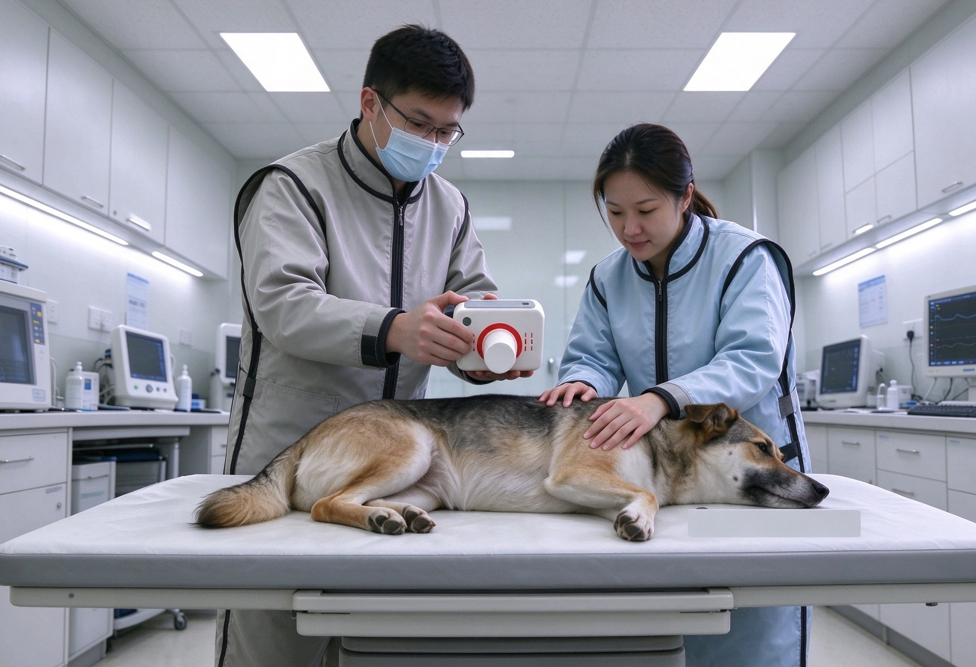
A handheld X-ray unit is a compact, mobile, digital imaging device that veterinarians can bring right to the animal for point-of-care imaging.
It excels at bedside, localized, routine imaging. For complex studies requiring large fields and high penetration, it still needs to work alongside more specialized equipment.
Knowing the boundaries is essential—otherwise you’ll expect more from one device than it can deliver.
04 What It Actually Changes
Point-of-care imaging—pets stay put. The device comes to the animal, reducing back-and-forth movement and secondary stress.
Less restraint and sedation. Many exams no longer require knocking an animal down just to get an image—safer for the pet, easier on the vet.
Fast imaging, fewer retakes. Digital images appear in seconds, getting it right the first time without the hassle.
Portable and shareable. One unit can travel with the vet or rotate between exam rooms for higher utilization.
05 What to Look for in a Veterinary Handheld X-Ray Unit
Image clarity. If the details are clear, you can diagnose with confidence.
Portability and battery life. Can you hold it steady with one hand? Will the charge last a full day of appointments?
Safety and shielding. Radiation protection design and exposure control matter for both pets and veterinarians.
Scenario fit. Consider your common orthopedic, dental, and emergency work—will it genuinely earn its place in your practice?
06 Final Thoughts
For a clinic that wants faster exams and less stress for pets, the question isn’t whether to adopt a handheld X-ray unit—it’s how to choose one that fits your practice.
A good device should be a tool that makes a veterinarian’s job easier, not another hurdle to clear.
If you work in veterinary care and struggle with imaging and restraint, leave a comment about your situation—we can look together at which approach fits best.
Post time: Oct-27-2026