

1、Advantages and disadvantages of X-rays:
X-rays, this powerful scientific tool, not only reveal the internal structure of matter to us, but also bring risks that cannot be ignored. The potential harm of X-rays to human tissues depends on the amount and location of radiation. Especially the eyes and head, due to the lack of thick tissue protection, are more susceptible to injury.
2、Special risks of soft X-rays
Soft X-rays used in diffraction analysis are more harmful to the human body compared to medical hard X-rays due to their longer wavelength, weaker penetration, and stronger absorption. Experimenters must be vigilant at all times to ensure that protective measures against X-rays are in place.
3、The Importance of Protective Measures
Excessive exposure to X-rays can lead to conditions ranging from minor burns to severe radiation sickness, and even death. Therefore, avoid direct exposure to X-ray beams and also protect against scattered rays. Direct X-ray beams usually only exist in specific directions, while scattered X-rays are widely distributed in the space near the path of direct X-rays. Therefore, the optical path of the direct X-ray beam must be completely shielded with a heavy metal plate, and even gaps smaller than 1mm may cause X-ray leakage.
4、Protective materials and equipment
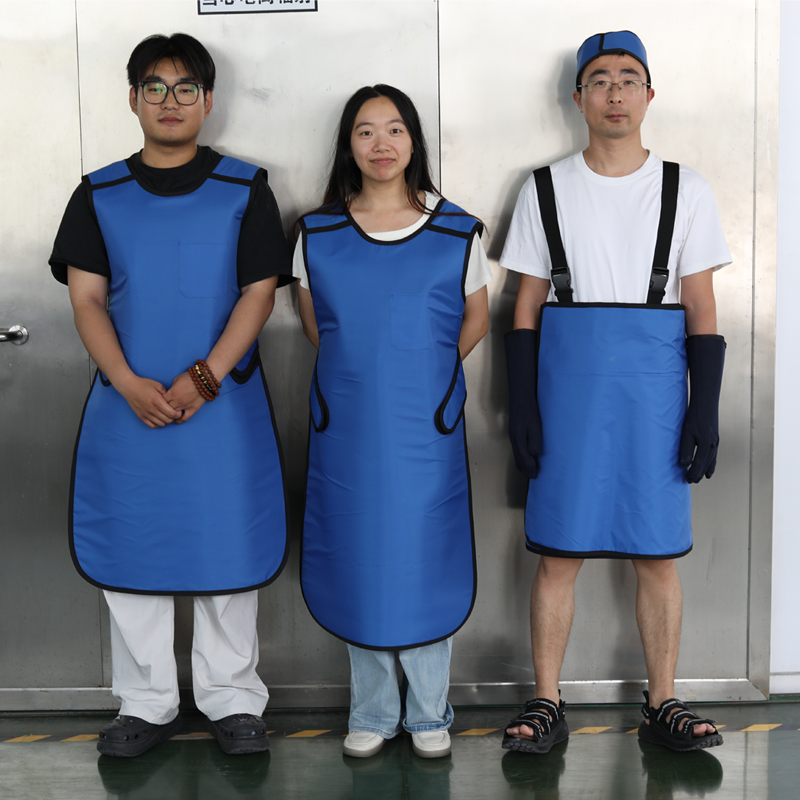
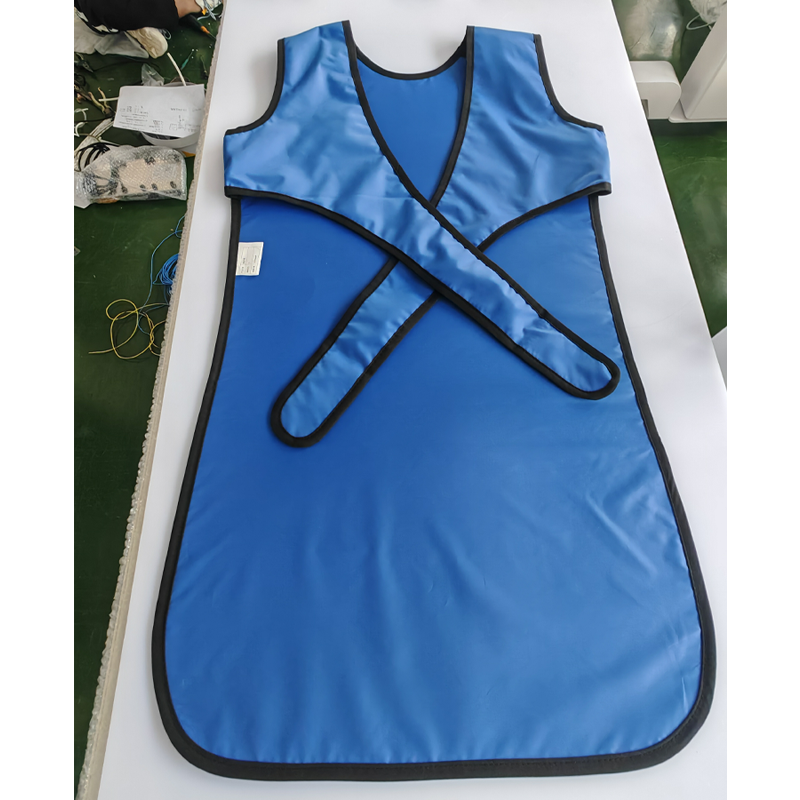
Lead or lead containing products such as lead plates, lead glass, lead rubber plates, or products containing heavy metal elements such as radiation resistant organic glass containing high amounts of tin can be used for X-ray protection.
5、Protection regulations and standards
According to relevant protection regulations, units using X-rays must apply for a “Radiation Work Permit” and a “Radiation Worker Certificate”, and the person in charge must undergo qualification review. The leakage of the protective cover of the X-ray device must comply with the protection standards, and the air absorption dose rate of the radiation at any position 5cm outside the surface of the casing must be less than 2.5 μ Gy/hour. X-ray operators are required to use protective equipment, possess knowledge of radiation protection, and undergo regular occupational health examinations. The allowable dose equivalent for X-ray operators is set at no more than 5 rem per year or 3 rem per three months.
6、Contact us:
Address:E Building of Future Star Scientific Innovation Industrial Zone of No.957 Wolong East Street, Yulong Community, Xincheng District, Hi Tech Area, Weifang, Shandong, China.
Email:sales@newheekxray.com
Phone:+86 19953639012
Whatsapp:+86 19953639012
Post time: Jan-29-2026