

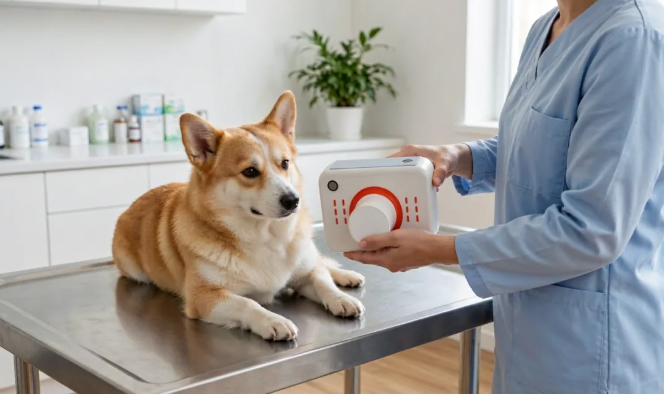
Hello, let me introduce myself first. I am a handheld portable X‑ray unit, compact and lightweight. I usually stay inside the instrument cabinet of a veterinary clinic.
My schedule has been quite packed lately. In the morning, Dr. Lin takes me out to scan a hamster. In the afternoon, I examine a turtle’s shell. At 11 p.m., I get called into action again — a cat has swallowed a sewing needle.
Veterinary practitioners call me the emergency support helper. Today I finally get a moment to talk about what I do in this pet hospital.
What I Do Best: No Sedation Required
In veterinary clinics, the biggest challenge for radiography is never technical. It is the uncooperative patients. Birds try to fly, rabbits kick hard, cats scratch, and hamsters can slip right through your fingers. Traditional large X‑ray machines require animals to be fixed in standard positions. If positioning fails, sedation or even general anesthesia will be used.
Anesthesia carries risks. Tiny animals have sensitive metabolism. Both vets and pet owners worry about the danger of anesthesia just for one radiograph.
My workflow is straightforward. The vet aims me at the target area, triggers exposure, and the image is ready in seconds. The animal can stay in its natural posture. Many small creatures will not even realize what just happened.
As vets often say, anesthesia for radiography is unnecessary with me.
My Patient List Is More Diverse Than You Expect
You may be surprised how wide my patient range covers. Birds, reptiles, turtles, rabbits, hamsters, small cats and dogs are all suitable for scanning.
A turtle that swallowed gravel needs imaging to check its digestive tract. Parrot leg bones are as thin as toothpicks, and radiographs are required to confirm fracture alignment. Hamster skeletons demand fine imaging quality. Foreign body ingestion and limb fractures in cats and dogs are routine cases.
Small animals cannot endure excessive handling. This is exactly where lightweight, fast and low‑stress devices like me shine.
Late Night Emergency Scenarios Are Where I Shine
Pet emergencies often arrive suddenly. Owners panic, and the injured animals are stressed too. Traffic accidents, falls from heights and accidental ingestion of foreign objects are common cases. Delays such as transferring clinics and waiting will only add to the animal’s suffering.
My core value is delivering immediate diagnostic results. If foreign objects are present, the scan shows their shape and exact location. For bone injuries, the image clearly displays fractures and displacement.
Even if the result means surgery at another clinic, the vet can explain the situation with the radiograph. Owners gain clear information, and pets avoid extra suffering.
My Traits And Key Purchase Tips
Lastly, here are practical notes for clinics planning to get a unit like me. First, confirm applicable scanning areas. I work well for limbs and dental imaging, but I am not suitable for lumbar spine radiography due to power limits. Define your scanning needs before purchasing. Second, check the imaging setup. I am the X‑ray generator. Different flat panel detectors and imaging systems deliver different image performance. Before buying, confirm whether the full package can output images directly. Third, choose certified manufacturers. For radiological equipment, valid certificates, test reports and reliable after‑sales service are all essential.
Post time: Nov-24-2026